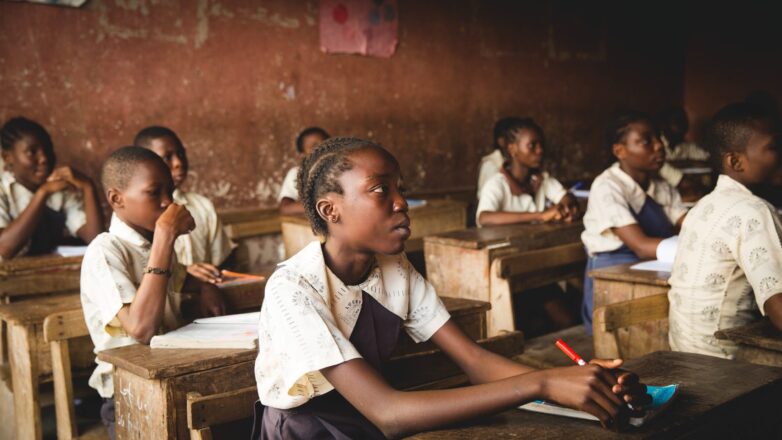
Where Transformation Happens Daily
At Moshi Kids Centre in Kilimanjaro Region, Tanzania, transformation isn’t just a goal—it’s a daily reality. Since opening our doors in 2018, we’ve witnessed firsthand how quality education combined with comprehensive support creates ripples of change that extend far beyond individual students to their families and entire community.
Today, we serve over 300 students with a 95% attendance rate and 85% successfully transitioning to the next education level. But behind these statistics are real children with dreams, families with renewed hope, and a community experiencing unprecedented change. These are their stories.
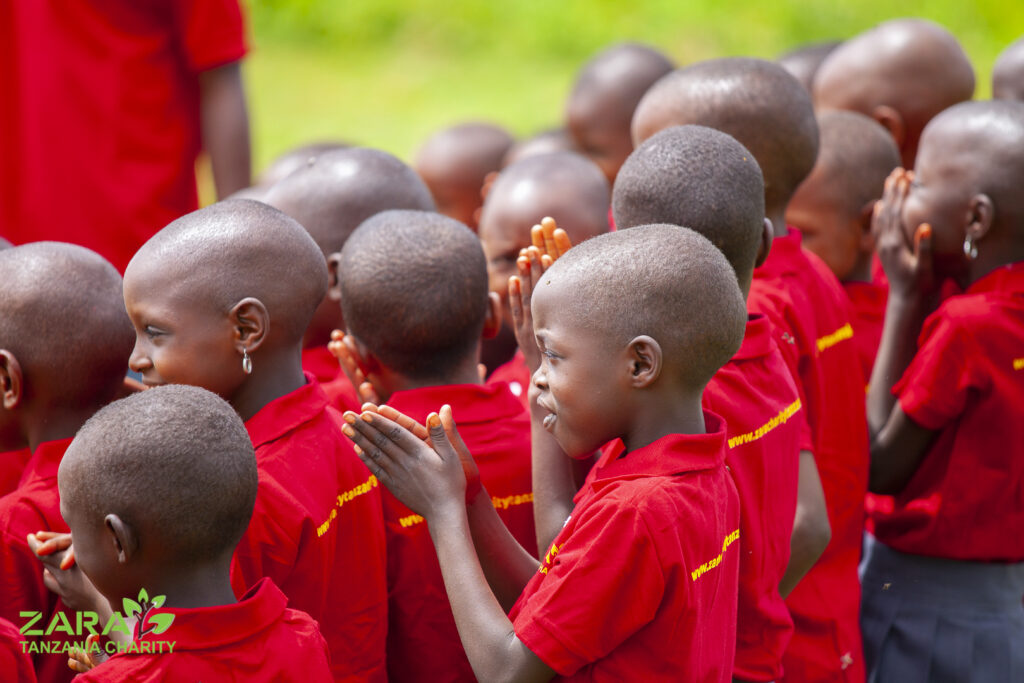
Grace: From Struggling to Top of Her Class
When eight-year-old Grace first arrived at Moshi Kids Centre three years ago, she could barely write her own name. Coming from a family of subsistence farmers surviving on less than $2 per day, Grace had attended school sporadically—pulled out whenever her parents needed help collecting water, caring for younger siblings, or working in the fields.
The Challenge: Grace was two years behind her age group academically. She was withdrawn, rarely spoke in class, and seemed convinced she couldn’t learn. Her parents, though loving, saw little value in daughters’ education and were considering keeping her home permanently.
The Intervention: Through our comprehensive support program, we provided full scholarship covering fees, uniform, and supplies; daily nutritious meals; intensive tutoring targeting literacy gaps; counseling to address confidence issues; and parent education workshops showing education’s economic benefits.
The Transformation: Today, Grace ranks in the top 5 of her class. She leads the school’s reading club, mentors younger struggling students, and dreams of becoming a teacher. Her test scores improved 70% in the first year alone. Perhaps more remarkably, Grace’s mother now volunteers at the school and insists her younger daughters will complete their education.
“Before Moshi Kids Centre, I thought I was stupid. Now I know I was just hungry and didn’t have books. I want to be a teacher so other children like me can learn.” – Grace, Age 11
Juma: Overcoming Language and Cultural Barriers
Juma arrived at our Ngorongoro Maasai Pre-School program speaking only Maa, his native language, with no exposure to Swahili—Tanzania’s national language and medium of primary instruction. For many Maasai children, this language barrier becomes an insurmountable obstacle to education.
The Challenge: Without Swahili proficiency, Maasai children often struggle in primary school, fall behind, and eventually drop out. Traditional education systems rarely accommodate mother-tongue instruction.
Our Approach: We developed a bilingual curriculum with initial instruction in Maa to build foundational concepts, gradual Swahili introduction through songs and games, cultural integration using traditional Maasai counting systems, and elder involvement validating both traditional knowledge and formal education.
The Results: After two years in our pre-school, Juma entered Standard 1 fully prepared. He’s now in Standard 3, excelling in both languages, and serving as a bridge between Maasai culture and modern education. His success has convinced 15 other Maasai families to enroll their children.

Emmanuel: Thriving with Learning Differences
Emmanuel’s story highlights an often-invisible population: children with learning differences who are frequently excluded from education entirely. At age 9, Emmanuel had attended three different schools. Each had expelled him for being ‘unteachable.’
The Reality: In under-resourced schools, teachers lack training to support diverse learners. Children with dyslexia, ADHD, or processing disorders are often labeled as troublemakers and pushed out of education.
What We Did Differently: Professional assessment identified dyslexia and processing challenges. We provided teacher training in inclusive education, individualized learning plans with multisensory teaching methods, assistive technology, and regular parent communication.
Emmanuel Today: Learning at his own pace with appropriate support, Emmanuel excels in mathematics and art. He’s discovered a passion for drawing and uses visual note-taking to compensate for reading challenges. His confidence has soared.
The Community Impact: Beyond Individual Students
While individual transformations are powerful, the most significant change at Moshi Kids Centre is community-wide.
Economic Impact:
School construction employed 25 local workers, injecting 45 million Tanzanian Shillings into the local economy. Twelve full-time positions provide stable employment. Local suppliers report increased business. Families report 30% income increases when daughters attend school and help with modern agricultural techniques learned in science classes.
Health Improvements:
Clinic data shows: 40% decrease in diarrheal diseases since we implemented hygiene education; 60% reduction in waterborne illnesses; near-universal vaccination rates among students’ younger siblings; increased prenatal care attendance.
Changing Attitudes:
Female enrollment increased from 35% to 48% in three years. Zero child marriages among our students compared to regional rates of approximately 30%. Parents who once said ‘school is for boys’ now actively seek educational opportunities for daughters.
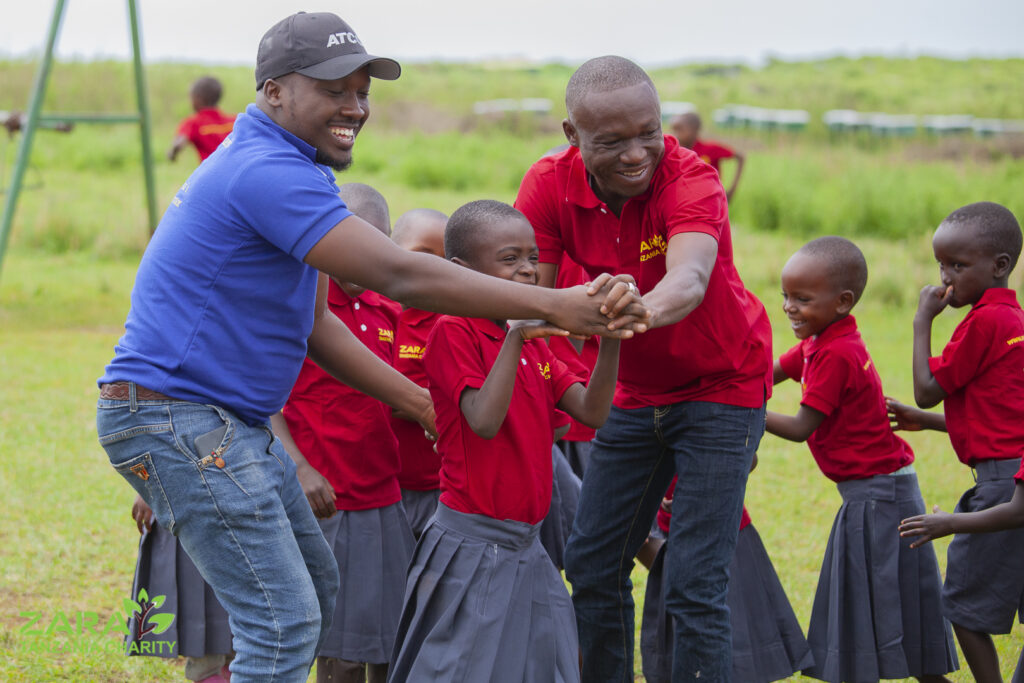
Measuring Success: Beyond Test Scores
Academic Metrics:
95% attendance rate (vs. 70% regional average) • 85% successful transition to next education level • 70% average improvement in test scores within first year • Zero student dropouts in the past two years
Holistic Development:
100% of students participate in extracurricular activities • 80% report increased confidence • Students demonstrate leadership in community initiatives • Alumni return as volunteers and mentors
Community Integration:
200+ parents attend monthly workshops • 50+ community members volunteer regularly • Local businesses sponsor school events • Neighboring villages request similar programs

Your Role in These Stories
Every success story at Moshi Kids Centre exists because supporters believed in the power of education and invested in possibility.
Grace’s transformation was possible because someone donated $250 for her annual scholarship. Juma’s bilingual education program was funded by a foundation grant of $10,000. Emmanuel’s assessment and specialized materials cost $500. The WASH facilities that improved community health required $25,000 from multiple donors.
What’s Next?
We’re expanding to serve 150 additional students, but we need: $75,000 for two new classrooms • $30,000 for teacher training and salaries • $15,000 for expanded nutrition program • $500 each for 50 additional student scholarships
Every donation writes another success story. Whose story will you help tell?
Donate: gofund.me/02b1396f
Sponsor a Student: Email zara@zaracharitytanzania.org
Volunteer: Apply here
Visit: Contact us to tour Moshi Kids Centre and meet our students
Contact Zara Charity Tanzania
Email: zara@zaracharitytanzania.org
Phone/WhatsApp: +255 655 451 003
Website: www.zaracharitytanzania.org
These stories are just the beginning. The next chapter depends on you.
Leave a Reply