Category: Charity

  • Corporate Social Responsibility in Tanzania: How Businesses Create Lasting Community Impact (2026 Guide)

    Corporate Social Responsibility in Tanzania: How Businesses Create Lasting Community Impact (2026 Guide)

    .ztc-csr-blog{–green:#0b6b48;–deep:#073f2d;–lime:#9ac43c;–ink:#17231e;–muted:#5f6f65;–soft:#f4f8f5;–line:#dfe9e2;–white:#fff;width:100%;max-width:none!important;margin:0!important;padding:0!important;overflow:hidden;font-family:Arial,Helvetica,sans-serif;color:var(–ink);background:#fff;line-height:1.78;font-size:17px}
    .ztc-csr-blog,.ztc-csr-blog *{box-sizing:border-box}.ztc-csr-blog a{color:inherit}.ztc-csr-blog img{max-width:100%;height:auto}.ztc-container{width:calc(100% – 40px);max-width:1180px;margin:0 auto!important;padding:0!important}
    .ztc-hero{position:relative;overflow:hidden;width:100%;padding:92px 0 76px;margin:0;background:linear-gradient(135deg,#073f2d 0%,#0b6b48 58%,#669b34 100%);color:#fff}
    .ztc-hero:before,.ztc-hero:after{content:””;position:absolute;border-radius:50%;background:rgba(255,255,255,.08)}.ztc-hero:before{width:420px;height:420px;right:-140px;top:-210px}.ztc-hero:after{width:260px;height:260px;left:-90px;bottom:-160px}
    .ztc-hero-inner{position:relative;z-index:1;max-width:960px!important;margin:0 auto!important;text-align:center}.ztc-eyebrow,.ztc-kicker{display:inline-flex;align-items:center;justify-content:center;gap:8px;font-size:13px;font-weight:800;letter-spacing:.1em;text-transform:uppercase}.ztc-eyebrow{padding:8px 14px;border:1px solid rgba(255,255,255,.28);border-radius:999px;background:rgba(255,255,255,.1)}
    .ztc-hero h1{max-width:940px;margin:20px auto!important;font-size:clamp(38px,5.5vw,66px);line-height:1.08;letter-spacing:-.035em;color:#fff;text-align:center}.ztc-lead{max-width:830px;margin:0 auto!important;font-size:clamp(18px,2vw,22px);color:#edf7f1;text-align:center}.ztc-meta{display:flex;flex-wrap:wrap;justify-content:center;gap:10px;margin-top:28px}.ztc-meta span{padding:9px 13px;border-radius:999px;background:rgba(255,255,255,.12);font-size:14px;font-weight:700}
    .ztc-layout{display:block!important;max-width:1180px;margin:0 auto!important;padding:54px 0 84px!important}.ztc-toc{position:relative!important;top:auto!important;width:100%;max-width:960px;margin:0 auto 48px!important;padding:24px 26px;border:1px solid var(–line);border-radius:18px;background:var(–soft);display:grid;grid-template-columns:repeat(3,minmax(0,1fr));gap:0 24px}.ztc-toc strong{grid-column:1/-1;display:block;margin-bottom:12px;font-size:19px;color:var(–deep)}.ztc-toc a{display:block;padding:9px 0;border-bottom:1px solid #e2ebe5;text-decoration:none;color:#405047;font-size:14px}.ztc-toc a:hover{color:var(–green)}
    .ztc-content{width:100%;max-width:860px!important;margin:0 auto!important;padding:0!important;min-width:0}.ztc-content h2,.ztc-faq h2{margin:58px 0 18px!important;font-size:clamp(30px,4vw,42px);line-height:1.2;letter-spacing:-.025em;color:var(–green);text-align:left;scroll-margin-top:30px}.ztc-content>h2:first-child{margin-top:0!important}.ztc-content h3{margin:32px 0 10px!important;font-size:24px;line-height:1.35;color:#244d3b;text-align:left}.ztc-content p{margin:0 0 19px!important;color:#36453d;text-align:left}.ztc-content strong{color:#1b3428}
    .ztc-content blockquote{margin:30px 0!important;padding:24px 28px;border-left:5px solid var(–lime);border-radius:0 15px 15px 0;background:#f1f7eb;color:#24412f;font-size:20px;font-weight:700;line-height:1.55;text-align:left}
    .ztc-content h2[id^=”improving”],.ztc-content h2[id^=”strengthening”],.ztc-content h2[id^=”empowering”],.ztc-content h2[id^=”creating-skills”],.ztc-content h2[id^=”protecting”],.ztc-content h2[id^=”expanding”],.ztc-content h2[id^=”supporting-community”]{padding:24px 26px;border:1px solid var(–line);border-radius:18px;background:linear-gradient(135deg,#f7faf8,#eef6f1)}
    .ztc-note{padding:15px 18px!important;margin:12px 0 20px!important;border-left:3px solid var(–lime);border-radius:0 10px 10px 0;background:var(–soft)}.ztc-cta{margin:42px 0!important;padding:34px!important;border-radius:22px;background:linear-gradient(135deg,#073f2d,#0b6b48);color:#fff;box-shadow:0 22px 55px rgba(11,107,72,.18)}.ztc-cta h2{margin:8px 0 13px!important;color:#fff!important;font-size:clamp(27px,4vw,39px)!important}.ztc-cta p{color:#eaf5ef!important}.ztc-btn{display:inline-flex;align-items:center;justify-content:center;gap:10px;margin:10px 10px 0 0!important;padding:14px 20px;border-radius:10px;background:var(–lime);color:#17301f!important;text-decoration:none!important;font-weight:800;transition:.2s ease}.ztc-btn:hover{transform:translateY(-2px);filter:brightness(1.04)}
    .ztc-faq{width:100%;margin:64px 0!important;padding:34px;border:1px solid var(–line);border-radius:22px;background:var(–soft)}.ztc-faq .ztc-kicker{color:var(–green)}.ztc-faq h2{margin:8px 0 24px!important}.ztc-faq details{margin:10px 0;padding:0 18px;border:1px solid var(–line);border-radius:12px;background:#fff}.ztc-faq summary{position:relative;cursor:pointer;list-style:none;padding:17px 28px 17px 0;font-weight:800}.ztc-faq summary:after{content:”+”;position:absolute;right:0;font-size:24px;color:var(–green)}.ztc-faq details[open] summary:after{content:”–”}.ztc-faq details p{padding:0 0 17px!important;margin:0!important}
    @media(max-width:900px){.ztc-toc{grid-template-columns:repeat(2,minmax(0,1fr))}.ztc-layout{padding-top:38px!important}.ztc-content{max-width:760px!important}}
    @media(max-width:600px){.ztc-container{width:calc(100% – 24px)}.ztc-hero{padding:68px 0 54px}.ztc-hero h1{font-size:38px}.ztc-meta{gap:8px}.ztc-meta span{font-size:12px}.ztc-toc{grid-template-columns:1fr;padding:20px;margin-bottom:36px!important}.ztc-content h2,.ztc-faq h2{font-size:29px}.ztc-content h3{font-size:21px}.ztc-content blockquote{padding:20px;font-size:18px}.ztc-cta,.ztc-faq{padding:22px!important}.ztc-btn{width:100%;margin-right:0!important}}

    Corporate Social Responsibility Tanzania

    How Corporate Social Responsibility in Tanzania Creates Lasting Community Impact

    Businesses are expected to do more than generate profit. Discover how strategic CSR partnerships in Tanzania can improve education, healthcare, livelihoods, environmental protection and long-term community resilience.

    Updated July 202612-minute readCSR TanzaniaCommunity Development

    What is Corporate Social Responsibility (CSR)?

    Corporate Social Responsibility (CSR) refers to the commitment businesses make to operate ethically while contributing positively to society, the environment, and local communities. Rather than focusing solely on financial success, responsible companies invest in initiatives that improve people’s lives, protect natural resources, and create sustainable economic opportunities.

    In Tanzania, Corporate Social Responsibility has evolved from occasional charitable donations into strategic long-term partnerships between businesses, nonprofit organizations, schools, healthcare institutions, and community groups. Companies now recognize that creating social value also strengthens their reputation, builds customer trust, attracts talented employees, and contributes to long-term business success.

    Whether supporting education programs, improving access to clean water, empowering women entrepreneurs, conserving wildlife, or providing healthcare services, CSR initiatives help address some of Tanzania’s most pressing social and economic challenges while fostering inclusive growth.

    Corporate Social Responsibility is no longer optional.

    Today’s customers, investors, employees, and communities increasingly expect businesses to contribute positively to society. Organizations that integrate CSR into their core strategy often build stronger brands, improve stakeholder relationships, and achieve sustainable growth.

    Why Corporate Social Responsibility Matters in Tanzania

    Tanzania is one of Africa’s fastest-growing economies, with remarkable opportunities across tourism, agriculture, manufacturing, technology, finance, mining, and renewable energy. However, many communities still face challenges related to education, healthcare, youth unemployment, environmental degradation, and access to essential services.

    Corporate Social Responsibility provides businesses with a practical way to help bridge these gaps while creating measurable social impact. Instead of viewing CSR as an expense, forward-thinking organizations see it as a long-term investment that benefits both society and business.

    A well-designed CSR strategy enables companies to align their business objectives with community needs, ensuring that every investment creates meaningful, lasting outcomes rather than short-term publicity.

    When businesses invest in people, communities prosper. When communities prosper, businesses thrive.

    Across Tanzania, companies are supporting school infrastructure, sponsoring scholarships, funding vocational training, improving maternal healthcare, planting trees, protecting wildlife, providing clean drinking water, and empowering women-led enterprises. These initiatives demonstrate how responsible business practices contribute directly to national development goals and the Sustainable Development Goals (SDGs).

    The Growing CSR Landscape in Tanzania

    Over the past decade, Corporate Social Responsibility has become an integral part of many organizations operating in Tanzania. Local businesses, multinational corporations, financial institutions, tourism operators, and international investors increasingly recognize that sustainable business success depends on healthy, educated, and resilient communities.

    The tourism sector, for example, has embraced CSR by supporting wildlife conservation, community education, cultural preservation, and local employment. Financial institutions have expanded financial literacy programs and entrepreneurship training, while manufacturers have invested in environmental sustainability and workforce development.

    Technology companies are contributing digital skills training, internet access, innovation hubs, and educational technology that prepare young people for future employment opportunities. Meanwhile, agricultural businesses are helping farmers adopt climate-smart practices that improve productivity while protecting natural resources.

    These collaborative efforts illustrate that CSR is most effective when businesses partner with trusted community organizations that understand local needs and can implement sustainable projects with transparency and accountability.

    Successful CSR is built on partnership, transparency, measurable impact, and long-term commitment—not one-time donations.

    Corporate partnership

    Partner with Zara Tanzania Charity to Create Lasting Change

    Whether your organization wants to support education, healthcare, women’s empowerment, child welfare, environmental conservation, or community development, Zara Tanzania Charity can help design impactful CSR initiatives that transform lives while strengthening your company’s social impact.

    Partner With Us

    Key Areas Where Corporate Social Responsibility Creates Lasting Change in Tanzania

    The most effective Corporate Social Responsibility initiatives in Tanzania are designed around real community priorities. They do not simply provide temporary assistance. Instead, they address the deeper causes of poverty, inequality, limited access to services, and unemployment.

    For businesses, this means moving beyond occasional donations and developing CSR programs that have clear goals, reliable implementation partners, measurable outcomes, and long-term value. When companies listen to communities and work with trusted nonprofit organizations, their investment can produce results that continue long after the original project has ended.

    The following areas offer some of the strongest opportunities for businesses seeking to create meaningful and sustainable community impact in Tanzania.

    1. Improving Access to Quality Education

    Education is one of the most powerful areas for CSR projects in Tanzania. It equips children and young people with the knowledge, confidence, and practical skills they need to build better futures. However, many learners still face barriers such as inadequate classrooms, limited learning materials, long travel distances, household poverty, and insufficient access to digital resources.

    Businesses can help reduce these barriers by supporting school infrastructure, scholarships, classroom resources, teacher development, libraries, computer labs, school feeding programs, and mentorship initiatives.

    Building and Improving Learning Facilities

    A safe and supportive learning environment can significantly improve a child’s educational experience. Companies may fund the construction or renovation of classrooms, libraries, sanitation facilities, science laboratories, kitchens, and dormitories.

    These investments are especially valuable when they are planned in consultation with school leaders, parents, and community representatives. A classroom should not be built simply because it creates a good photograph. It should respond to an identified need, be properly maintained, and support a wider plan for improving education.

    Providing Learning Materials and Digital Access

    Books, desks, stationery, computers, internet access, and educational technology can improve participation and help students develop skills that are increasingly important in modern workplaces.

    Technology-focused companies can make a particularly strong contribution by supporting digital literacy programs, coding clubs, computer training, online learning access, and teacher technology workshops.

    Supporting Scholarships and School Retention

    Scholarships can help vulnerable students remain in school and continue their education. A carefully managed scholarship program may cover tuition, uniforms, transport, meals, learning materials, or examination costs.

    The strongest scholarship initiatives also include mentorship, academic monitoring, emotional support, and family engagement. These additional elements help ensure that the student receives more than financial support alone.

    High-impact education CSR should focus on both access and quality.

    A successful program does not only place children in classrooms. It also helps create safe learning environments, capable teachers, suitable resources, and pathways to future opportunities.

    2. Strengthening Healthcare, Nutrition, and Community Well-Being

    Good health is essential for education, employment, family stability, and economic development. When communities lack access to reliable healthcare, preventable illnesses can interrupt schooling, reduce household income, and place additional pressure on families.

    Healthcare is therefore an important focus for corporate giving in Tanzania. Businesses can support community health outreach, maternal and child health, nutrition programs, medical equipment, health education, mobile clinics, disability support, and improved healthcare facilities.

    Maternal and Child Health Support

    Companies can partner with health organizations to improve access to prenatal care, safe delivery services, postnatal support, nutrition education, and essential supplies for mothers and children.

    Businesses should avoid implementing health programs without qualified medical guidance. Partnerships with licensed healthcare providers, local authorities, and experienced NGOs help ensure that projects are safe, appropriate, and aligned with community health priorities.

    Nutrition and School Feeding Programs

    A child who is hungry may struggle to concentrate, participate, and perform well in school. CSR-supported nutrition initiatives can help schools and community organizations provide balanced meals, nutrition education, kitchen facilities, food storage, and sustainable food production projects.

    Where possible, school feeding programs can also source food from local farmers. This creates a wider economic benefit by supporting both learners and surrounding agricultural communities.

    Community Health Education

    Prevention-focused programs can help communities make informed decisions about hygiene, nutrition, sanitation, reproductive health, non-communicable diseases, and early treatment.

    Businesses can sponsor educational materials, community workshops, screenings, local health campaigns, and training for community health workers.

    A healthy community has a stronger foundation for learning, productivity, dignity, and long-term development.

    3. Empowering Women Through Skills, Enterprise, and Opportunity

    Women’s economic empowerment creates benefits that extend across entire households and communities. When women have access to income, training, finance, markets, and decision-making opportunities, they are better positioned to support education, nutrition, healthcare, and family stability.

    For this reason, women’s empowerment is a valuable focus for CSR in Tanzania. Businesses can support entrepreneurship training, vocational skills, financial literacy, savings groups, market access, agricultural programs, mentorship, and women-led community enterprises.

    Skills Development and Vocational Training

    Training programs may include tailoring, food production, digital skills, tourism services, handicrafts, agriculture, bookkeeping, hospitality, beauty services, and small-business management.

    However, training alone is not enough. Participants also need access to equipment, startup support, market connections, mentorship, and practical business guidance. Without these elements, beneficiaries may complete a course but still struggle to earn a sustainable income.

    Supporting Women-Led Businesses

    Companies can strengthen women-led enterprises by purchasing their products, including them in supply chains, helping improve packaging and branding, connecting them with new buyers, or supporting compliance and business registration.

    This approach is often more sustainable than one-time donations because it helps create continuing income and stronger local economies.

    Financial Literacy and Savings Groups

    Savings and lending groups can help women build financial resilience, manage household expenses, invest in small enterprises, and respond to emergencies. Businesses can support these groups with training, record-keeping tools, financial education, and responsible links to financial institutions.

    The best women’s empowerment projects do not treat women as passive recipients.

    They recognize women as leaders, entrepreneurs, workers, caregivers, decision-makers, and important drivers of community development.

    4. Creating Skills and Employment Pathways for Young People

    Tanzania has a large and energetic youth population. This creates enormous potential for innovation, entrepreneurship, and economic growth. At the same time, many young people face challenges when moving from education into employment.

    Businesses are well positioned to close this gap through internships, apprenticeships, mentoring, career guidance, entrepreneurship programs, technical training, and workplace-readiness initiatives.

    Internships and Apprenticeships

    Well-structured work placements give young people practical experience and help them understand professional expectations. Companies can create internship opportunities within their own operations or support partner organizations that prepare young people for employment.

    A quality internship should have clear learning objectives, supervision, feedback, and fair treatment. Young people should not be used as unpaid replacements for permanent staff.

    Digital and Technical Skills

    Training in web development, graphic design, digital marketing, data management, cybersecurity, coding, mobile technology, and e-commerce can prepare young people for expanding areas of employment.

    Other valuable technical fields include mechanics, renewable energy, electrical installation, plumbing, construction, hospitality, tourism, agriculture, and food processing.

    Entrepreneurship and Business Mentorship

    Some young people will create their own employment rather than enter formal jobs. CSR programs can help them develop business plans, understand customer needs, manage finances, use digital tools, and connect with markets.

    Seed funding can be useful, but it should be accompanied by training, monitoring, and mentorship. Giving money without preparation or follow-up may not produce sustainable businesses.

    5. Protecting the Environment and Supporting Climate Resilience

    Tanzania’s forests, wildlife, water sources, agricultural land, and coastal ecosystems are central to community life and national development. Environmental degradation can reduce farm productivity, threaten water access, increase climate vulnerability, and affect tourism-based livelihoods.

    Environmental CSR programs can support tree planting, waste management, clean energy, water conservation, sustainable agriculture, wildlife protection, recycling, and community environmental education.

    Responsible Tree Planting

    Tree planting is a popular CSR activity, but its success should not be measured only by the number of seedlings placed in the ground. Businesses should consider the suitability of species, land ownership, community involvement, maintenance, survival rates, and long-term monitoring.

    A smaller project with strong survival rates is usually more valuable than a large event where most seedlings are not maintained.

    Waste Reduction and Recycling

    Companies can improve their own environmental performance while supporting wider community initiatives. This may include reducing single-use plastics, improving waste separation, supporting recycling enterprises, funding community cleanups, and educating customers and employees.

    Climate-Smart Agriculture

    Businesses connected to agriculture can support farmers with water-efficient practices, soil conservation, improved storage, sustainable inputs, crop diversification, and access to markets.

    These initiatives can help protect livelihoods while strengthening food security and resilience to changing weather conditions.

    Renewable and Clean Energy Solutions

    Solar lighting, efficient cooking technologies, renewable power for schools and clinics, and clean-energy training can reduce environmental pressure while improving essential services.

    Environmental CSR should begin inside the business itself.

    A company that funds tree planting while ignoring pollution, excessive waste, or harmful operating practices risks damaging its credibility. Responsible impact requires both internal improvement and community investment.

    6. Expanding Access to Clean Water and Sanitation

    Reliable access to safe water affects health, education, dignity, household productivity, and local economic activity. In some communities, women and children spend significant time collecting water, reducing the time available for school, work, and other responsibilities.

    Businesses can support boreholes, rainwater harvesting, water storage, filtration systems, sanitation facilities, handwashing stations, and community water-management training.

    Sustainability Beyond Installation

    A water project should include much more than construction. Communities need clear management arrangements, maintenance plans, repair funding, water-quality monitoring, and training for responsible use.

    Without these systems, infrastructure may stop functioning after a short period, even if the original project was expensive.

    School Sanitation and Dignity

    Safe toilets, handwashing facilities, clean water, and menstrual-health support can improve school attendance and create a healthier learning environment.

    Companies supporting education should therefore consider sanitation as part of a complete school-development strategy.

    7. Supporting Community Infrastructure and Essential Services

    CSR can also help communities improve shared facilities such as schools, health centres, community halls, libraries, sports grounds, water points, and renewable-energy systems.

    Infrastructure projects are highly visible, but they require careful planning. Companies should verify land ownership, permissions, technical standards, maintenance responsibilities, and the genuine priority of the proposed project.

    Community members should be involved from the beginning. When people participate in identifying needs, planning solutions, and overseeing implementation, they are more likely to value and maintain the final project.

    Corporate partnership

    Turn Your Company’s CSR Vision Into Measurable Impact

    Zara Tanzania Charity can work with businesses, foundations, tourism companies, professional organizations, and international partners to develop responsible community initiatives in education, health, women’s empowerment, youth development, environmental conservation, and basic services.

    Discuss a CSR Partnership

    Why Businesses Should Partner With Trusted NGOs in Tanzania

    Many businesses want to support communities but do not have the local experience, staff capacity, or project-management systems required to implement social programs effectively. This is where partnerships with established nonprofit organizations can provide significant value.

    A trusted NGO understands local conditions, community relationships, cultural considerations, implementation challenges, and the needs of intended beneficiaries. It can help a company move from a broad idea to a practical, accountable, and measurable project.

    Local Knowledge and Community Trust

    Communities are not all the same. A project that works well in one district may not be suitable in another. Local organizations can help businesses understand community priorities and avoid imposing solutions that have not been requested.

    Project Design and Implementation

    NGOs can assist with needs assessments, beneficiary selection, budgeting, risk management, procurement, implementation, and monitoring.

    This helps reduce the possibility of duplicated projects, poorly designed interventions, unsuitable donations, or infrastructure that cannot be maintained.

    Transparency and Reporting

    Corporate partners increasingly require evidence showing how funds were used and what outcomes were achieved. A responsible NGO should be able to provide budgets, implementation updates, photographs used with appropriate consent, beneficiary information handled safely, and outcome reports.

    Long-Term Follow-Up

    Social impact often takes time. An experienced partner can monitor progress after the launch event and identify whether additional support, training, repairs, or changes are required.

    A strong business-NGO partnership is not simply a transfer of money.

    It is a shared commitment built around clear responsibilities, community participation, ethical implementation, transparent reporting, and measurable results.

    How CSR Benefits Businesses Operating in Tanzania

    Corporate Social Responsibility should always prioritize genuine community benefit. However, responsible CSR can also create important business value when it is aligned with company values and implemented authentically.

    Stronger Brand Trust

    Customers are more likely to trust businesses that demonstrate responsibility through consistent action. A credible CSR program shows that the company understands its wider role in society.

    Better Employee Engagement

    Employees often feel more connected to organizations that contribute positively to communities. Staff volunteering, fundraising, mentorship, and skills-sharing can strengthen teamwork and workplace pride.

    Improved Stakeholder Relationships

    CSR can help businesses build constructive relationships with communities, customers, suppliers, government institutions, investors, and development partners.

    Greater Talent Attraction and Retention

    Many professionals want to work for organizations whose values extend beyond profit. A meaningful social-impact strategy can help a company attract and retain people who value purpose and ethical leadership.

    Long-Term Market Stability

    Businesses depend on functioning communities, skilled workers, reliable infrastructure, healthy customers, and a stable environment. Investments in education, health, skills, and sustainability can therefore contribute indirectly to stronger markets and more resilient operating conditions.

    Opportunities for Innovation

    Working with communities can help businesses identify new needs, develop inclusive products, improve services, and build more responsible supply chains.

    However, these benefits only emerge when CSR is genuine. Programs created mainly for publicity may attract criticism and damage trust, especially when claims are exaggerated or unsupported.

    Best Practices for Successful CSR Projects in Tanzania

    A well-intentioned CSR project can still fail if it is poorly planned. Companies should apply clear standards from the beginning to ensure their support produces meaningful and responsible outcomes.

    1. Start With a Genuine Needs Assessment

    Speak with community members, local leaders, schools, health providers, government representatives, and nonprofit organizations before deciding what to fund.

    2. Align the Project With Business Values

    A technology company may support digital education, while a tourism company may focus on conservation, community livelihoods, or hospitality training. Alignment makes the partnership more authentic and allows the business to contribute relevant expertise.

    3. Define Measurable Objectives

    Replace broad goals such as “support education” with clear targets. For example, a company may aim to equip a school library, train a defined number of teachers, or provide learning materials to identified students.

    4. Create a Realistic Budget

    The budget should include implementation, transport, training, monitoring, administration, maintenance, communication, and risk-management costs where appropriate.

    5. Involve the Community

    Beneficiaries should participate in planning and decision-making. Community ownership improves relevance, accountability, and sustainability.

    6. Protect Dignity and Privacy

    CSR communication should not exploit vulnerable people. Businesses and nonprofit partners must use respectful language, seek consent, protect children’s identities, and avoid portraying communities as helpless.

    7. Measure Outcomes, Not Only Activities

    Counting donated items, planted trees, or event attendees is useful, but it does not fully show impact. Companies should also ask whether attendance improved, trees survived, incomes increased, health awareness changed, or services became more reliable.

    8. Plan for Sustainability

    Consider who will maintain facilities, replace equipment, continue training, manage resources, and cover recurring costs after the initial funding period.

    9. Communicate Honestly

    Share successes, challenges, lessons, and verified results. Avoid making claims that cannot be supported by evidence.

    10. Commit to Long-Term Partnership

    One-time support can be valuable, but sustained partnerships often create deeper results. Multi-year collaboration allows businesses and NGOs to learn, improve, and respond to changing needs.

    Common CSR Mistakes Businesses Should Avoid

    Companies can protect their investment and reputation by avoiding several common mistakes.

    Choosing projects for publicity rather than community need: A highly visible project is not automatically the most useful project.

    Donating unsuitable items: Used equipment, expired products, inappropriate clothing, or unsupported technology may create disposal costs instead of benefits.

    Ignoring maintenance: Infrastructure without a maintenance plan may quickly become unusable.

    Excluding local stakeholders: Projects designed without community input may face resistance or fail to address the real problem.

    Using beneficiaries as marketing material: Communication should protect dignity, privacy, and informed consent.

    Focusing only on launch events: Sustainable impact requires follow-up after ceremonies, photographs, and media coverage.

    Overstating results: Claims should be based on clear evidence and responsible reporting.

    Failing to examine internal practices: CSR cannot replace fair employment, ethical sourcing, environmental responsibility, and legal compliance.

    How Zara Tanzania Charity Can Support Corporate CSR Partnerships

    Zara Tanzania Charity works to connect compassionate individuals, businesses, and partners with initiatives that can improve lives and strengthen communities in Tanzania.

    For companies seeking a reliable CSR partner, collaboration can begin by identifying the social issue, location, target community, available budget, expected timeline, and desired outcomes.

    Depending on the project’s scope, a partnership may involve education support, community health, child welfare, women’s empowerment, youth development, environmental action, infrastructure, or other locally relevant priorities.

    A Practical CSR Partnership Process

    Initial consultation: Discuss the company’s objectives, values, budget, preferred impact area, and expected level of involvement.

    Community-needs review: Assess local priorities and identify a project that is relevant, feasible, and sustainable.

    Project proposal: Develop objectives, activities, budget, timeline, responsibilities, risks, and intended outcomes.

    Implementation: Coordinate approved activities with appropriate stakeholders and community representatives.

    Monitoring: Track progress, spending, participation, challenges, and early outcomes.

    Reporting: Provide clear updates and evidence appropriate to the project.

    Review and continuation: Evaluate lessons and identify whether the partnership should be expanded, adjusted, or continued.

    Businesses may also involve employees through volunteering, mentorship, fundraising, professional services, training, or skills-based contributions.

    The most valuable CSR partnerships combine corporate resources, nonprofit experience, and community knowledge around one shared purpose.

    How Businesses Can Measure CSR Impact in Tanzania

    A successful Corporate Social Responsibility program in Tanzania should be measured by more than the amount of money donated or the number of photographs taken during a project launch. Real impact is demonstrated through clear improvements in people’s lives, community services, economic opportunity, and environmental sustainability.

    Before starting a CSR initiative, businesses should define the problem they want to address, the people they intend to support, the activities they will fund, and the results they expect to achieve. These objectives should be realistic, measurable, and connected to the needs identified by the community.

    Important CSR Indicators to Track

    The indicators used will depend on the type of project. Education projects may track school attendance, access to learning materials, classroom completion, student retention, or examination participation.

    Healthcare initiatives may measure the number of people reached, health screenings completed, medical equipment provided, community health workers trained, or improvements in access to essential services.

    Women’s empowerment programs may monitor the number of participants trained, businesses created, income changes, savings-group participation, market access, or the sustainability of women-led enterprises.

    Environmental projects may measure tree survival rates, waste collected, households adopting clean energy, land restored, water systems maintained, or community participation in conservation activities.

    Useful CSR measurement should answer three questions

    What changed? Who benefited? Is the improvement likely to continue after the initial funding ends?

    Combine Numbers With Human Stories

    Statistics help businesses understand scale, but they do not always capture the full meaning of a project. Responsible impact reporting can combine measurable data with carefully documented stories showing how individuals, families, schools, or communities benefited.

    These stories should always be shared respectfully. Businesses should obtain consent, protect children’s identities, avoid exaggerated claims, and ensure that beneficiaries are represented with dignity.

    Review Challenges as Well as Successes

    Not every project will proceed exactly as planned. Weather, supply delays, changing community needs, staffing challenges, and infrastructure limitations can affect implementation.

    A trustworthy CSR report should explain both achievements and challenges. Honest reporting helps companies improve future projects and strengthens confidence among employees, investors, customers, communities, and implementation partners.

    How to Build a Strong CSR Strategy for Tanzania

    Companies do not need to support every social cause. A focused strategy is usually more effective than spreading resources across many unrelated projects.

    The first step is to identify the issues that connect naturally with the company’s values, industry, location, employees, customers, and long-term goals.

    Step 1: Identify Your Company’s Purpose

    Businesses should begin by asking what kind of positive contribution they want to make. A company may focus on education, health, environmental protection, women-led businesses, youth employment, water access, or community infrastructure.

    The chosen area should reflect both community priorities and the company’s ability to contribute meaningfully.

    Step 2: Understand the Local Context

    Companies should avoid assuming that they already understand what a community needs. A local assessment helps identify existing services, gaps, previous projects, community priorities, and potential implementation risks.

    Working with local leaders, schools, health facilities, community organizations, and trusted nonprofits improves the quality of this assessment.

    Step 3: Select a Reliable Implementation Partner

    A strong partner should understand the local environment, communicate clearly, maintain transparent financial systems, protect beneficiaries, and provide realistic reports.

    Businesses should review the partner’s experience, governance, legal status, project history, safeguarding procedures, reporting systems, and community relationships before committing funds.

    Step 4: Set a Clear Budget and Timeline

    The project budget should explain how resources will be allocated. It may include materials, transport, technical expertise, training, monitoring, staff time, administration, communication, and maintenance.

    The timeline should also be realistic. Some projects can be completed within weeks, while education, livelihood, health, and conservation programs may require several months or years to show meaningful results.

    Step 5: Define Roles and Responsibilities

    Every partner should understand what it is responsible for. The company may provide funding, volunteers, equipment, expertise, or communications support, while the nonprofit partner manages community engagement, implementation, monitoring, and reporting.

    Step 6: Monitor Progress Regularly

    Monitoring should not wait until the project is finished. Regular updates help partners identify problems early, adjust activities, and ensure resources are being used responsibly.

    Step 7: Evaluate and Improve

    At the end of each project phase, businesses should review what worked, what did not work, what beneficiaries experienced, and what should change in the future.

    This learning process allows the CSR strategy to improve over time and helps companies develop stronger, more sustainable partnerships.

    How Employees Can Participate in Corporate Social Responsibility

    CSR becomes more meaningful when employees are involved. Staff participation can strengthen teamwork, improve motivation, and help employees understand the company’s values through practical action.

    Employee involvement should be carefully planned so that volunteering supports the project rather than creating additional work for community organizations.

    Skills-Based Volunteering

    Employees can share professional skills such as accounting, marketing, web design, legal support, business planning, technology training, project management, communications, or human-resource development.

    Skills-based volunteering can be especially valuable because it helps nonprofit organizations strengthen their internal capacity.

    Mentorship Programs

    Professionals can mentor students, entrepreneurs, women-led businesses, or young people preparing for employment. Effective mentorship should have clear goals, suitable mentors, safeguarding guidelines, and a defined schedule.

    Workplace Fundraising

    Employees may organize fundraising campaigns, matched-giving programs, charity walks, payroll giving, or workplace donation drives.

    Donation campaigns should be based on a verified list of needs. Collecting random items without checking their suitability may create storage, transport, and disposal challenges.

    Corporate Volunteer Days

    Volunteer days can include school improvement, tree care, environmental cleanups, professional workshops, community outreach, or project monitoring.

    The most effective volunteer activities are designed with the implementation partner and respond to a genuine need.

    CSR Opportunities for Different Industries in Tanzania

    Every industry can contribute to community development in a way that reflects its expertise, resources, and operating environment.

    Tourism and Hospitality

    Tour operators, hotels, lodges, travel companies, and hospitality businesses can support conservation, hospitality training, local suppliers, cultural preservation, school development, clean water, and community tourism enterprises.

    Tourism businesses may also offer guests opportunities to support verified community programs without pressuring them or turning vulnerable communities into attractions.

    Banks and Financial Institutions

    Financial institutions can support financial literacy, youth entrepreneurship, women-led enterprises, savings groups, business mentorship, school banking education, and access to responsible financial services.

    Technology and Telecommunications

    Technology companies can support digital literacy, computer labs, online safety education, coding programs, internet access, innovation hubs, and digital tools for schools or nonprofit organizations.

    Agriculture and Food Businesses

    Agricultural businesses can support farmer training, climate-smart agriculture, food storage, market access, school feeding, nutrition education, irrigation, and value-addition initiatives.

    Manufacturing and Construction

    Manufacturers and construction companies can support vocational education, workplace safety, recycling, infrastructure, technical apprenticeships, environmental restoration, and responsible waste management.

    Healthcare and Pharmaceutical Companies

    Healthcare businesses can support training, screenings, community education, essential equipment, maternal health, nutrition, disability inclusion, and improved access to professional health services.

    The strongest CSR program uses what the company already knows and does well.

    A company can create greater value when it contributes not only money, but also expertise, technology, networks, staff experience, and long-term commitment.

    CSR questions answered

    Frequently Asked Questions About CSR in Tanzania

    What is Corporate Social Responsibility in Tanzania?

    It is a company’s commitment to operate ethically and invest in social, environmental and economic initiatives that improve Tanzanian communities while supporting sustainable business growth.

    Why is CSR important for companies operating in Tanzania?

    CSR helps companies build trust, strengthen stakeholder relationships, engage employees and contribute to solutions in education, health, employment, water access and environmental protection.

    What are the best CSR projects for businesses in Tanzania?

    The strongest projects respond to verified local needs. Common priorities include education, healthcare, women’s enterprise, youth skills, clean water, sanitation, conservation and community infrastructure.

    How can a company find a reliable NGO partner in Tanzania?

    Review the organisation’s legal status, governance, project record, safeguarding policies, financial controls, local relationships and reporting systems before agreeing on clear roles and measurable outcomes.

    How much should a company spend on CSR?

    There is no single amount suitable for every business. The budget should be affordable, transparent and sufficient to cover implementation, monitoring, administration and long-term maintenance.

    Can small businesses participate in CSR?

    Yes. Small businesses can contribute through targeted donations, employee volunteering, mentorship, pro-bono services, local purchasing and partnerships with community organisations.

    How can companies measure the success of a CSR project?

    Set baseline information and track outputs, outcomes and sustainability indicators such as attendance, income change, service access, equipment use, tree survival or continued community participation.

    Is CSR the same as making a charitable donation?

    No. A donation may be one activity within CSR, but strategic CSR includes responsible operations, community consultation, clear objectives, implementation, measurement and long-term accountability.

    How can employees take part in CSR activities?

    Employees can participate through skills-based volunteering, mentorship, fundraising, community outreach, professional training and carefully planned corporate volunteer days.

    How can a business partner with Zara Tanzania Charity?

    Begin with a consultation covering your company’s values, preferred impact area, budget, location, timeline and desired outcomes. A suitable project proposal and reporting framework can then be developed.

    Final Thoughts: CSR Can Create Lasting Community Impact in Tanzania

    Corporate Social Responsibility has the potential to create meaningful and lasting change across Tanzania. When businesses invest responsibly in education, healthcare, women’s empowerment, youth opportunity, clean water, environmental protection, and community infrastructure, they help strengthen the foundations on which people and local economies depend.

    However, sustainable impact requires more than a donation or a one-day event. It requires listening to communities, choosing experienced partners, setting clear goals, protecting dignity, tracking results, and committing to long-term improvement.

    Businesses should also remember that external charity cannot replace responsible internal practices. A company must treat employees fairly, comply with the law, reduce environmental harm, operate ethically, and maintain responsible relationships with customers and suppliers.

    When these internal and external responsibilities work together, CSR becomes more than a marketing activity. It becomes part of how the business creates value.

    For companies seeking to support communities in Tanzania, collaboration with a trusted local organization can make the process more relevant, transparent, measurable, and sustainable.

    Through thoughtful partnerships, corporate resources can combine with nonprofit experience and community knowledge to create opportunities that continue benefiting people for years to come.

    Create a Meaningful CSR Partnership in Tanzania

    Partner with Zara Tanzania Charity to support community-led initiatives in education, healthcare, women’s empowerment, youth development, environmental conservation, child welfare, and sustainable community development.

    Let us work together to design a transparent, measurable, and responsible CSR project that reflects your company’s values and responds to real community priorities.

    Start a CSR Partnership
    Support Our Work

    About Zara Tanzania Charity

    Zara Tanzania Charity supports community initiatives designed to improve opportunity, dignity, well-being, and sustainable development in Tanzania. We welcome partnerships with responsible businesses, donors, volunteers, foundations, and organizations seeking to create meaningful local impact.

    Help More Businesses Discover Responsible CSR Opportunities

    Share this guide with a business leader, CSR manager, employee, donor, foundation, or organization interested in supporting sustainable community development in Tanzania.

    {“@context”: “https://schema.org”, “@type”: “FAQPage”, “mainEntity”: [{“@type”: “Question”, “name”: “What is Corporate Social Responsibility in Tanzania?”, “acceptedAnswer”: {“@type”: “Answer”, “text”: “It is a company’s commitment to operate ethically and invest in social, environmental and economic initiatives that improve Tanzanian communities while supporting sustainable business growth.”}}, {“@type”: “Question”, “name”: “Why is CSR important for companies operating in Tanzania?”, “acceptedAnswer”: {“@type”: “Answer”, “text”: “CSR helps companies build trust, strengthen stakeholder relationships, engage employees and contribute to solutions in education, health, employment, water access and environmental protection.”}}, {“@type”: “Question”, “name”: “What are the best CSR projects for businesses in Tanzania?”, “acceptedAnswer”: {“@type”: “Answer”, “text”: “The strongest projects respond to verified local needs. Common priorities include education, healthcare, women’s enterprise, youth skills, clean water, sanitation, conservation and community infrastructure.”}}, {“@type”: “Question”, “name”: “How can a company find a reliable NGO partner in Tanzania?”, “acceptedAnswer”: {“@type”: “Answer”, “text”: “Review the organisation’s legal status, governance, project record, safeguarding policies, financial controls, local relationships and reporting systems before agreeing on clear roles and measurable outcomes.”}}, {“@type”: “Question”, “name”: “How much should a company spend on CSR?”, “acceptedAnswer”: {“@type”: “Answer”, “text”: “There is no single amount suitable for every business. The budget should be affordable, transparent and sufficient to cover implementation, monitoring, administration and long-term maintenance.”}}, {“@type”: “Question”, “name”: “Can small businesses participate in CSR?”, “acceptedAnswer”: {“@type”: “Answer”, “text”: “Yes. Small businesses can contribute through targeted donations, employee volunteering, mentorship, pro-bono services, local purchasing and partnerships with community organisations.”}}, {“@type”: “Question”, “name”: “How can companies measure the success of a CSR project?”, “acceptedAnswer”: {“@type”: “Answer”, “text”: “Set baseline information and track outputs, outcomes and sustainability indicators such as attendance, income change, service access, equipment use, tree survival or continued community participation.”}}, {“@type”: “Question”, “name”: “Is CSR the same as making a charitable donation?”, “acceptedAnswer”: {“@type”: “Answer”, “text”: “No. A donation may be one activity within CSR, but strategic CSR includes responsible operations, community consultation, clear objectives, implementation, measurement and long-term accountability.”}}, {“@type”: “Question”, “name”: “How can employees take part in CSR activities?”, “acceptedAnswer”: {“@type”: “Answer”, “text”: “Employees can participate through skills-based volunteering, mentorship, fundraising, community outreach, professional training and carefully planned corporate volunteer days.”}}, {“@type”: “Question”, “name”: “How can a business partner with Zara Tanzania Charity?”, “acceptedAnswer”: {“@type”: “Answer”, “text”: “Begin with a consultation covering your company’s values, preferred impact area, budget, location, timeline and desired outcomes. A suitable project proposal and reporting framework can then be developed.”}}]}

  • Charity in Tanzania: How Giving Changes Lives and Builds Stronger Communities (2026 Guide)

    Charity in Tanzania: How Giving Changes Lives and Builds Stronger Communities (2026 Guide)

    .ztc-blog{
    font-family:Arial,sans-serif;
    background:#ffffff;
    color:#2c3e50;
    line-height:1.9;
    padding:40px 20px;
    }

    .ztc-container{
    max-width:1100px;
    margin:auto;
    }

    .ztc-hero{
    background:linear-gradient(rgba(0,96,83,.82),rgba(16,128,90,.82)),url(“YOUR FEATURED IMAGE”);
    background-size:cover;
    background-position:center;
    padding:90px 50px;
    border-radius:24px;
    color:#fff;
    margin-bottom:35px;
    }

    .ztc-badge{
    display:inline-block;
    background:#f4b400;
    color:#005d4f;
    padding:8px 20px;
    border-radius:40px;
    font-weight:bold;
    font-size:13px;
    text-transform:uppercase;
    }

    .ztc-hero h1{
    font-size:48px;
    margin:20px 0;
    line-height:1.2;
    color:#fff;
    }

    .ztc-hero p{
    font-size:20px;
    max-width:820px;
    }

    .ztc-meta{
    display:flex;
    flex-wrap:wrap;
    gap:12px;
    margin-top:25px;
    }

    .ztc-meta div{
    background:rgba(255,255,255,.15);
    padding:10px 16px;
    border-radius:30px;
    font-size:14px;
    }

    .ztc-card{
    background:#fff;
    padding:35px;
    margin:35px 0;
    border-radius:18px;
    box-shadow:0 8px 24px rgba(0,0,0,.05);
    }

    .ztc-card h2{
    color:#007d6b;
    font-size:34px;
    border-left:6px solid #f4b400;
    padding-left:16px;
    margin-bottom:20px;
    }

    .ztc-card h3{
    color:#007d6b;
    margin-top:30px;
    font-size:24px;
    }

    .ztc-highlight{
    background:#eefaf7;
    border-left:5px solid #007d6b;
    padding:22px;
    border-radius:10px;
    margin:25px 0;
    }

    .ztc-toc{
    background:#f8fbfa;
    padding:30px;
    border-radius:18px;
    margin:35px 0;
    }

    .ztc-toc ul{
    columns:2;
    padding-left:20px;
    }

    .ztc-toc a{
    color:#007d6b;
    font-weight:bold;
    text-decoration:none;
    }

    @media(max-width:768px){

    .ztc-hero{
    padding:50px 25px;
    }

    .ztc-hero h1{
    font-size:34px;
    }

    .ztc-toc ul{
    columns:1;
    }

    }

    Charity in Tanzania

    Charity in Tanzania: How Compassion Is Transforming Lives and Building Stronger Communities

    Discover how supporting a trusted charity in Tanzania creates opportunities for children, empowers women, strengthens communities, improves healthcare, and protects the environment for future generations.

    ❤️ Community Development
    🎓 Education
    👩 Women Empowerment
    🌱 Sustainability
    🤝 Make an Impact

    Why Charity in Tanzania Matters

    Charity in Tanzania plays a vital role in improving lives, creating opportunities, and supporting sustainable development in communities across the country. While Tanzania is blessed with incredible natural beauty, vibrant cultures, and resilient people, many communities continue to face challenges related to poverty, limited access to education, healthcare, clean water, and economic opportunities.

    Charitable organizations bridge these gaps by working alongside local communities to create practical, long-term solutions rather than temporary assistance. Their work focuses on empowering people with knowledge, resources, and opportunities that enable them to build stronger and more independent futures.

    At Zara Tanzania Charity, we believe lasting change begins with compassion, partnership, and community participation. Every donation, volunteer, and supporter contributes towards creating sustainable improvements that benefit children, families, women, and entire communities.

    Our Mission

    To empower vulnerable communities through education, healthcare, women’s empowerment, environmental conservation, and sustainable community development while creating opportunities that improve lives for generations to come.

    Education: Creating Opportunities for Every Child

    Education is one of the most powerful tools for breaking the cycle of poverty. Through our education initiatives, Zara Tanzania Charity works to improve access to quality learning opportunities for children from disadvantaged backgrounds by supporting schools, providing educational materials, improving learning environments, and encouraging equal access to education.

    Every child deserves the opportunity to learn, dream, and achieve their full potential. By investing in education today, we help build stronger families, healthier communities, and a brighter future for Tanzania.

    • School supplies and learning materials.
    • Support for vulnerable children.
    • Educational sponsorship opportunities.
    • Improved classroom environments.
    • Community education programs.

    .ztc-blog{
    font-family:Arial,sans-serif;
    background:#ffffff;
    color:#2c3e50;
    line-height:1.9;
    padding:40px 20px;
    }

    .ztc-container{
    max-width:1100px;
    margin:auto;
    }

    .ztc-hero{
    background:linear-gradient(rgba(0,96,83,.82),rgba(16,128,90,.82)),url(“YOUR FEATURED IMAGE”);
    background-size:cover;
    background-position:center;
    padding:90px 50px;
    border-radius:24px;
    color:#fff;
    margin-bottom:35px;
    }

    .ztc-badge{
    display:inline-block;
    background:#f4b400;
    color:#005d4f;
    padding:8px 20px;
    border-radius:40px;
    font-weight:bold;
    font-size:13px;
    text-transform:uppercase;
    }

    .ztc-hero h1{
    font-size:48px;
    margin:20px 0;
    line-height:1.2;
    color:#fff;
    }

    .ztc-hero p{
    font-size:20px;
    max-width:820px;
    }

    .ztc-meta{
    display:flex;
    flex-wrap:wrap;
    gap:12px;
    margin-top:25px;
    }

    .ztc-meta div{
    background:rgba(255,255,255,.15);
    padding:10px 16px;
    border-radius:30px;
    font-size:14px;
    }

    .ztc-card{
    background:#fff;
    padding:35px;
    margin:35px 0;
    border-radius:18px;
    box-shadow:0 8px 24px rgba(0,0,0,.05);
    }

    .ztc-card h2{
    color:#007d6b;
    font-size:34px;
    border-left:6px solid #f4b400;
    padding-left:16px;
    margin-bottom:20px;
    }

    .ztc-card h3{
    color:#007d6b;
    margin-top:30px;
    font-size:24px;
    }

    .ztc-highlight{
    background:#eefaf7;
    border-left:5px solid #007d6b;
    padding:22px;
    border-radius:10px;
    margin:25px 0;
    }

    .ztc-toc{
    background:#f8fbfa;
    padding:30px;
    border-radius:18px;
    margin:35px 0;
    }

    .ztc-toc ul{
    columns:2;
    padding-left:20px;
    }

    .ztc-toc a{
    color:#007d6b;
    font-weight:bold;
    text-decoration:none;
    }

    @media(max-width:768px){

    .ztc-hero{
    padding:50px 25px;
    }

    .ztc-hero h1{
    font-size:34px;
    }

    .ztc-toc ul{
    columns:1;
    }

    }

    Charity in Tanzania

    Charity in Tanzania: How Compassion Is Transforming Lives and Building Stronger Communities

    Discover how supporting a trusted charity in Tanzania creates opportunities for children, empowers women, strengthens communities, improves healthcare, and protects the environment for future generations.

    ❤️ Community Development
    🎓 Education
    👩 Women Empowerment
    🌱 Sustainability
    🤝 Make an Impact

    Why Charity in Tanzania Matters

    Charity in Tanzania plays a vital role in improving lives, creating opportunities, and supporting sustainable development in communities across the country. While Tanzania is blessed with incredible natural beauty, vibrant cultures, and resilient people, many communities continue to face challenges related to poverty, limited access to education, healthcare, clean water, and economic opportunities.

    Charitable organizations bridge these gaps by working alongside local communities to create practical, long-term solutions rather than temporary assistance. Their work focuses on empowering people with knowledge, resources, and opportunities that enable them to build stronger and more independent futures.

    At Zara Tanzania Charity, we believe lasting change begins with compassion, partnership, and community participation. Every donation, volunteer, and supporter contributes towards creating sustainable improvements that benefit children, families, women, and entire communities.

    Our Mission

    To empower vulnerable communities through education, healthcare, women’s empowerment, environmental conservation, and sustainable community development while creating opportunities that improve lives for generations to come.

    Education: Creating Opportunities for Every Child

    Education is one of the most powerful tools for breaking the cycle of poverty. Through our education initiatives, Zara Tanzania Charity works to improve access to quality learning opportunities for children from disadvantaged backgrounds by supporting schools, providing educational materials, improving learning environments, and encouraging equal access to education.

    Every child deserves the opportunity to learn, dream, and achieve their full potential. By investing in education today, we help build stronger families, healthier communities, and a brighter future for Tanzania.

    • School supplies and learning materials.
    • Support for vulnerable children.
    • Educational sponsorship opportunities.
    • Improved classroom environments.
    • Community education programs.

    Volunteer with Zara Tanzania Charity

    One of the most rewarding ways to support a charity in Tanzania is by becoming a volunteer. Volunteers bring fresh ideas, valuable skills, enthusiasm, and compassion that strengthen ongoing community initiatives while creating meaningful cultural exchange.

    Whether you are a student seeking practical experience, a professional wanting to give back, or a traveller looking to make a positive impact, volunteering offers an opportunity to contribute directly to sustainable community development while experiencing everyday life in Tanzania.

    Our volunteer placements are designed to match individual interests and skills while ensuring every participant works alongside local communities in a respectful, ethical, and sustainable way.

    Volunteer Opportunities Include

    • Teaching and educational support.
    • Childcare and youth mentoring.
    • Community development projects.
    • Women’s empowerment initiatives.
    • Healthcare outreach support.
    • Environmental conservation activities.
    • Fundraising and awareness campaigns.
    • Administration and project support.

    Volunteer Impact

    Every volunteer contributes to building stronger communities by sharing knowledge, encouraging local participation, and supporting long-term sustainable development rather than short-term assistance.

    Transparency and Accountability

    Trust is at the heart of everything we do. Zara Tanzania Charity is committed to ensuring that donations, volunteer contributions, and partnerships are managed responsibly and directed toward programs that create measurable impact.

    We work closely with local communities, schools, healthcare providers, and community leaders to identify genuine needs, implement practical solutions, and monitor project outcomes. Our focus is always on creating sustainable change that continues long after individual projects have been completed.

    Our Commitment

    • Responsible use of donations.
    • Community-led development.
    • Long-term sustainability.
    • Ethical volunteer engagement.
    • Partnership with local organizations.
    • Continuous monitoring and evaluation.

    Frequently Asked Questions

    How can I support Zara Tanzania Charity?

    You can support our work by donating, volunteering, partnering with us, sponsoring community projects, or helping raise awareness about our mission.

    Can international volunteers join your programs?

    Yes. We welcome volunteers from around the world who are passionate about education, healthcare, childcare, environmental conservation, and community development.

    How are donations used?

    Donations directly support community projects including education, healthcare, women’s empowerment, environmental conservation, youth programs, and sustainable development initiatives.

    Can I visit your projects in Tanzania?

    Depending on the project and program schedule, visitors and volunteers may have opportunities to experience our work and meet the communities we serve.

    Why should I support a charity in Tanzania?

    Your support helps improve access to education, healthcare, livelihoods, environmental conservation, and opportunities that create lasting positive change for vulnerable communities.

    Together We Can Build a Better Future

    Supporting a trusted charity in Tanzania is about more than making a donation—it is about investing in people, empowering communities, and creating opportunities that continue for generations. Every child who gains access to education, every woman who develops new skills, every family that benefits from improved healthcare, and every community that strengthens its future is a reminder that positive change begins with collective action.

    At Zara Tanzania Charity, we believe sustainable development happens when communities are empowered to shape their own future. Through education, healthcare, environmental conservation, women empowerment, and community development, we work hand in hand with local people to create lasting impact where it matters most.

    Whether you choose to donate, volunteer, partner with us, or simply share our mission with others, your support becomes part of a larger movement dedicated to compassion, dignity, and hope. Together, we can continue transforming lives and building stronger communities across Tanzania.

    Become Part of the Change

    Join Zara Tanzania Charity in creating brighter futures through education, healthcare, women empowerment, environmental conservation, and sustainable community development. Every action matters, and together we can make a lasting difference.

    Donate Now

    Become a Volunteer

    Volunteer with Zara Tanzania Charity

    One of the most rewarding ways to support a charity in Tanzania is by becoming a volunteer. Volunteers bring fresh ideas, valuable skills, enthusiasm, and compassion that strengthen ongoing community initiatives while creating meaningful cultural exchange.

    Whether you are a student seeking practical experience, a professional wanting to give back, or a traveller looking to make a positive impact, volunteering offers an opportunity to contribute directly to sustainable community development while experiencing everyday life in Tanzania.

    Our volunteer placements are designed to match individual interests and skills while ensuring every participant works alongside local communities in a respectful, ethical, and sustainable way.

    Volunteer Opportunities Include

    • Teaching and educational support.
    • Childcare and youth mentoring.
    • Community development projects.
    • Women’s empowerment initiatives.
    • Healthcare outreach support.
    • Environmental conservation activities.
    • Fundraising and awareness campaigns.
    • Administration and project support.

    Volunteer Impact

    Every volunteer contributes to building stronger communities by sharing knowledge, encouraging local participation, and supporting long-term sustainable development rather than short-term assistance.

    Transparency and Accountability

    Trust is at the heart of everything we do. Zara Tanzania Charity is committed to ensuring that donations, volunteer contributions, and partnerships are managed responsibly and directed toward programs that create measurable impact.

    We work closely with local communities, schools, healthcare providers, and community leaders to identify genuine needs, implement practical solutions, and monitor project outcomes. Our focus is always on creating sustainable change that continues long after individual projects have been completed.

    Our Commitment

    • Responsible use of donations.
    • Community-led development.
    • Long-term sustainability.
    • Ethical volunteer engagement.
    • Partnership with local organizations.
    • Continuous monitoring and evaluation.

    Frequently Asked Questions

    How can I support Zara Tanzania Charity?

    You can support our work by donating, volunteering, partnering with us, sponsoring community projects, or helping raise awareness about our mission.

    Can international volunteers join your programs?

    Yes. We welcome volunteers from around the world who are passionate about education, healthcare, childcare, environmental conservation, and community development.

    How are donations used?

    Donations directly support community projects including education, healthcare, women’s empowerment, environmental conservation, youth programs, and sustainable development initiatives.

    Can I visit your projects in Tanzania?

    Depending on the project and program schedule, visitors and volunteers may have opportunities to experience our work and meet the communities we serve.

    Why should I support a charity in Tanzania?

    Your support helps improve access to education, healthcare, livelihoods, environmental conservation, and opportunities that create lasting positive change for vulnerable communities.

    Together We Can Build a Better Future

    Supporting a trusted charity in Tanzania is about more than making a donation—it is about investing in people, empowering communities, and creating opportunities that continue for generations. Every child who gains access to education, every woman who develops new skills, every family that benefits from improved healthcare, and every community that strengthens its future is a reminder that positive change begins with collective action.

    At Zara Tanzania Charity, we believe sustainable development happens when communities are empowered to shape their own future. Through education, healthcare, environmental conservation, women empowerment, and community development, we work hand in hand with local people to create lasting impact where it matters most.

    Whether you choose to donate, volunteer, partner with us, or simply share our mission with others, your support becomes part of a larger movement dedicated to compassion, dignity, and hope. Together, we can continue transforming lives and building stronger communities across Tanzania.

    Become Part of the Change

    Join Zara Tanzania Charity in creating brighter futures through education, healthcare, women empowerment, environmental conservation, and sustainable community development. Every action matters, and together we can make a lasting difference.

    Donate Now

    Become a Volunteer

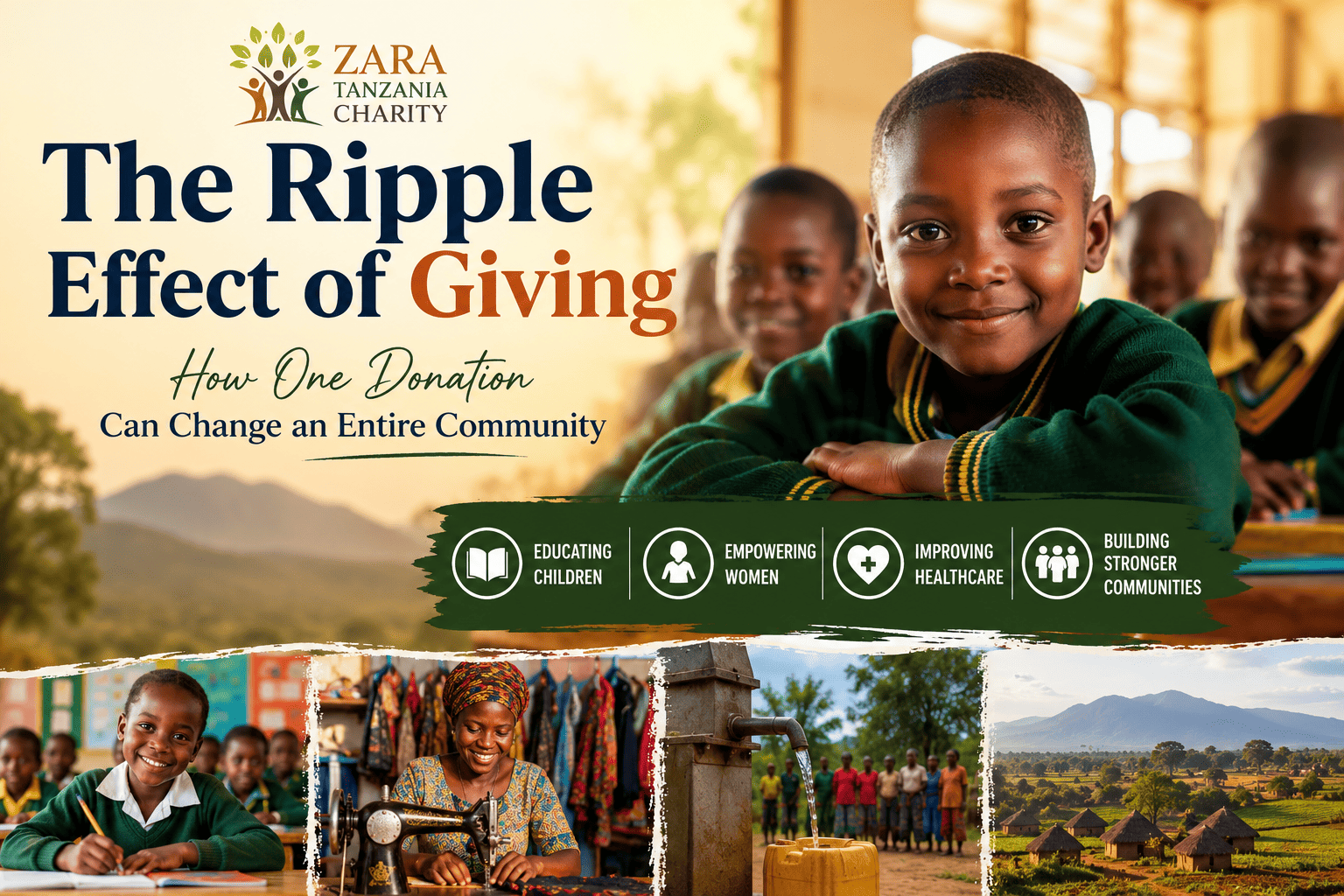
  • The Ripple Effect of Giving: How One Donation Can Change an Entire Community

    The Ripple Effect of Giving: How One Donation Can Change an Entire Community

    The Ripple Effect of Giving: How One Donation Can Change an Entire Community

    When people think about making a donation, they often picture a single act of kindness.

    A contribution.

    A gift.

    A helping hand.

    What many don’t realise is that generosity rarely stops with the person receiving it.

    Like a stone dropped into still water, every act of giving creates ripples that travel much farther than anyone expects.

    A child receives an education.

    That child grows into an adult who supports their own family.

    Their children attend school.

    Their community benefits from new ideas, better opportunities, and stronger leadership.

    It all begins with one decision to help.

    This is the true power of giving.

    At Zara Tanzania Charity, we’ve witnessed these ripple effects again and again. Every donation, no matter its size, becomes part of a much larger story—one that reaches children, families, women, schools, and entire communities across Tanzania.

    Giving isn’t simply about solving today’s challenges.

    It’s about creating opportunities that continue changing lives for years to come.

    Real Change Begins with One Opportunity

    Every community has people full of talent, determination, and hope.

    What many lack isn’t ability.

    It’s opportunity.

    A child may dream of becoming a teacher.

    A young woman may hope to start a small business.

    A family may want nothing more than access to clean water, healthcare, or quality education.

    Sometimes the only thing standing between a dream and reality is the opportunity to begin.

    That’s where charitable giving becomes so powerful.

    Rather than creating dependence, meaningful support removes barriers.

    It gives people the tools, knowledge, and confidence they need to build brighter futures for themselves.

    This is why understanding how donations change lives is so important.

    You’re not simply giving money.

    You’re helping create opportunities.

    Every Child Deserves the Chance to Dream

    Visit a classroom in rural Tanzania and you’ll quickly notice something remarkable.

    Children are naturally curious.

    They ask questions.

    They laugh together.

    They celebrate learning.

    Like children everywhere, they dream about becoming doctors, engineers, teachers, nurses, pilots, artists, and community leaders.

    Yet for many families, access to quality education remains a challenge.

    School supplies may be limited.

    Parents often work tirelessly simply to provide daily necessities.

    Some children walk long distances to attend school because they understand how valuable education can be.

    A donation may provide books.

    Another may supply classroom furniture.

    Someone else’s generosity helps purchase learning materials or supports teacher training.

    Each contribution removes another obstacle standing between a child and their future.

    Education doesn’t simply change one life.

    It changes generations.

    Small Gifts Often Create the Biggest Impact

    People sometimes hesitate to donate because they wonder whether their contribution is enough.

    “Can one donation really make a difference?”

    It’s a fair question.

    The answer is yes.

    Imagine one child receiving school supplies at the beginning of the academic year.

    Those books help them learn.

    Better learning builds confidence.

    Confidence improves performance.

    Education creates new opportunities.

    Eventually, that child may become someone who gives back to their own community.

    The original donation has now touched countless lives.

    The size of the gift isn’t always what matters most.

    It’s the opportunity that gift creates.

    Communities Grow Stronger Together

    Sustainable development isn’t about helping one individual while everyone else struggles.

    Real change happens when entire communities grow together.

    Children attend school.

    Parents gain new skills.

    Women develop businesses.

    Families improve their livelihoods.

    Communities become healthier.

    Hope begins replacing uncertainty.

    Every positive step strengthens the next.

    This is why community-focused organisations like Zara Tanzania Charity invest in long-term solutions rather than short-term fixes.

    The goal isn’t temporary relief.

    The goal is lasting transformation.

    And lasting transformation always begins with people working together.

    When Women Thrive, Communities Thrive

    Across Tanzania, women play an extraordinary role in supporting families and strengthening communities.

    They care for children.

    They manage households.

    They grow food.

    They run businesses.

    They become mentors.

    Yet many women face barriers that limit economic opportunity.

    Supporting women’s empowerment creates benefits that extend far beyond one individual.

    When women gain access to education, vocational training, financial independence, or entrepreneurship opportunities, entire families benefit.

    Children remain in school.

    Household incomes improve.

    Communities become more resilient.

    One opportunity creates another.

    And another.

    The ripple continues.

    Giving Restores More Than Hope

    Sometimes generosity provides something impossible to measure.

    Hope.

    Hope encourages parents to keep believing.

    Hope inspires children to continue learning.

    Hope gives communities confidence that positive change is possible.

    We’ve seen people regain confidence simply because someone believed in them.

    Sometimes knowing that people across the world care enough to help is just as meaningful as the practical support itself.

    Kindness reminds people they are not alone.

    That feeling can change lives.

    Education Breaks the Cycle of Poverty

    If you ask people what they hope for their children, the answers are remarkably similar no matter where they live.

    They want them to be healthy.

    They want them to be safe.

    They want them to have opportunities that perhaps they never had themselves.

    Education is often the bridge that connects those hopes to reality.

    When children receive a quality education, they gain much more than academic knowledge. They develop confidence, critical thinking skills, and the ability to make informed decisions about their future. Over time, these skills create opportunities for employment, financial independence, and stronger communities.

    This is one of the clearest examples of how donations change lives.

    A single contribution that helps a child stay in school today may lead to a teacher educating hundreds of future students, a nurse caring for an entire village, or an entrepreneur creating jobs within their community.

    The impact doesn’t stop with one individual.

    It continues for generations.

    Healthy Communities Begin with Healthy Families

    Education is only one piece of the puzzle.

    Communities flourish when families also have access to healthcare, clean water, nutritious food, and safe living conditions.

    Imagine a child who wants to learn but is too sick to attend school.

    Or a parent who spends hours every day searching for clean water instead of earning an income.

    These challenges are deeply connected.

    That’s why sustainable charities focus on supporting entire communities rather than addressing only one issue at a time.

    At Zara Tanzania Charity, we believe lasting change happens when education, healthcare, women’s empowerment, and community development work together.

    Every improvement strengthens another.

    Healthier children attend school more consistently.

    Educated young people make healthier choices.

    Stronger families create stronger communities.

    Positive change spreads naturally.

    Sustainable Giving Creates Lasting Impact

    There is an important difference between offering temporary assistance and creating long-term change.

    Emergency support is sometimes necessary, especially during times of crisis.

    But lasting transformation requires something more.

    It requires investment in people.

    Sustainable giving focuses on helping communities build the skills, confidence, and resources they need to create their own future.

    Instead of simply providing solutions, it empowers people to become part of those solutions.

    That might mean supporting education programmes.

    Providing vocational training.

    Helping women start small businesses.

    Improving access to healthcare.

    Supporting environmental conservation.

    Each initiative strengthens the community’s ability to thrive independently.

    This is why every donation becomes more than financial support.

    It becomes an investment in hope, resilience, and self-reliance.

    Every Donor Becomes Part of the Story

    Many people who support charitable organisations never meet the families they help.

    Yet they become an important part of those families’ stories.

    A child opening a new school bag may never know the name of the person who made it possible.

    A woman launching her first business may never meet the donor who helped fund her training.

    A community celebrating a new project may never shake hands with supporters living thousands of kilometres away.

    But the connection is real.

    Generosity creates invisible bridges between people who may never meet, yet whose lives become forever connected through kindness.

    That’s one of the most beautiful aspects of giving.

    You may never fully see the impact you’ve created.

    But that impact exists every single day.

    The Greatest Investment Is Believing in People

    One of the most inspiring things about community development is discovering what people are capable of when they’re given an opportunity.

    Children become confident learners.

    Parents become community leaders.

    Young women become successful entrepreneurs.

    Families become more financially secure.

    Communities begin solving challenges together.

    None of this happens because someone handed them success.

    It happens because someone believed they deserved the opportunity to create it.

    Sometimes the greatest gift we can offer isn’t money alone.

    It’s belief.

    Belief that children deserve an education.

    Belief that women deserve equal opportunities.

    Belief that every community deserves the chance to build a brighter future.

    That belief changes everything.

    Compassion Has No Borders

    One of the remarkable things about kindness is that it isn’t limited by geography.

    Someone living on the other side of the world can still help transform lives in Tanzania.

    Distance doesn’t reduce compassion.

    In fact, modern technology makes it easier than ever for individuals, families, schools, businesses, and organisations to support meaningful projects that create lasting impact.

    Whether it’s sponsoring education, supporting healthcare initiatives, empowering women, or investing in community development, every act of generosity becomes part of something much larger.

    Together, thousands of individual acts of kindness create extraordinary change.

    No one changes the world alone.

    But together, we change countless individual worlds.

    The Ripple Never Ends

    Imagine dropping a single pebble into a calm lake.

    The first ripple is small.

    Then another appears.

    And another.

    Eventually, the movement reaches every corner of the water.

    Giving works in much the same way.

    One donation helps one child.

    That child inspires a family.

    That family strengthens a community.

    That community creates opportunities for future generations.

    The original act of kindness continues long after the donation has been made.

    This is why generosity is never truly measured by the amount given.

    Its real value lies in the lives it touches.

    And those lives continue creating positive change long into the future.

    Frequently Asked Questions

    How do donations change lives?

    Donations create opportunities that improve education, healthcare, women’s empowerment, and community development. A single contribution can help provide school supplies, nutritious meals, vocational training, clean water, healthcare services, or income-generating opportunities. These improvements strengthen families and create lasting change across entire communities.

    Why should I donate to community development projects?

    Community development focuses on long-term solutions rather than temporary assistance. By supporting sustainable projects, you’re helping people build skills, improve their livelihoods, educate their children, and create stronger communities that continue thriving for years to come.

    Can a small donation really make a difference?

    Absolutely.

    Many people believe they need to give a large amount to create meaningful change, but that’s simply not true. Small donations, when combined with the generosity of others, make it possible to fund classrooms, support children’s education, improve healthcare, empower women, and strengthen communities.

    Every contribution matters because every opportunity matters.

    Why is sustainable giving important?

    Sustainable giving focuses on creating long-term impact rather than short-term relief. Instead of addressing only immediate needs, sustainable projects help communities become more independent through education, skills training, healthcare, environmental conservation, and economic empowerment.

    How does Zara Tanzania Charity use donations?

    At Zara Tanzania Charity, every donation helps support programmes that improve lives through education, women’s empowerment, healthcare, environmental conservation, and sustainable community development. Our goal is to work alongside local communities to create opportunities that continue benefiting future generations.

    Together, We Can Create Lasting Change

    Positive change doesn’t happen overnight.

    It grows through countless acts of kindness.

    One child receives an education.

    One family gains hope.

    One woman starts a business.

    One community becomes stronger.

    Then another.

    And another.

    Before long, what began as a single act of generosity becomes something far greater than anyone imagined.

    That’s the true ripple effect of giving.

    It isn’t measured only by the amount donated.

    It’s measured by the opportunities created, the confidence restored, and the futures transformed.

    At Zara Tanzania Charity, we believe lasting change begins when people come together with a shared purpose—to create opportunities for children, empower women, strengthen families, and build resilient communities across Tanzania.

    Every project we support is guided by one simple belief:

    Everyone deserves the opportunity to build a better future.

    With the support of compassionate individuals, businesses, schools, and partners around the world, we’re helping turn that belief into reality every single day.

    Your Kindness Can Change a Life Today

    Right now, there is a child eager to learn.

    A family working toward a brighter future.

    A young woman ready to build her own business.

    A community determined to create lasting change.

    Your generosity can help make those dreams possible.

    Whether you choose to make a one-time donation, become a monthly supporter, sponsor a community initiative, or partner with Zara Tanzania Charity, your contribution becomes part of a story that continues long after today.

    Together, we can create opportunities that transform lives—not just for one person, but for entire communities.

    Because every act of kindness creates another ripple.

    And every ripple has the power to change the world.

    ❤️ Make a Donation Today

    Your support helps provide:

    ✔ Quality education for children

    ✔ Nutritious meals

    ✔ Healthcare initiatives

    ✔ Women’s empowerment programmes

    ✔ Community development projects

    ✔ Environmental conservation

    ✔ Sustainable livelihoods

    👉 Donate Today

    Your generosity today can become someone else’s opportunity tomorrow.

    🤝 Partner With Zara Tanzania Charity

    Are you a business, school, organisation, or individual looking to create meaningful impact?

    We welcome partnerships that support sustainable development and empower communities across Tanzania.

    Together, we can achieve far more than any of us could alone.

    👉 Become a Partner Today

    Every Ripple Begins With One Decision

    History is full of moments that began with one person deciding to help.

    One teacher inspired a generation.

    One volunteer changed a child’s future.

    One donor gave a family hope.

    Today, that opportunity belongs to all of us.

    At Zara Tanzania Charity, we invite you to become part of a story that reaches far beyond a single donation.

    Together, we can invest in education, strengthen families, empower women, protect communities, and create opportunities that will continue changing lives for generations.

    Because the greatest gift we can give isn’t simply financial support.

    It’s the chance for someone else to believe that tomorrow can be better than today.

    Join us. Donate. Partner with us. Share our mission.

    Together, let’s create ripples of hope that reach every corner of our communities.

  • How Small Donations Create Big Change in Tanzania

    How Small Donations Create Big Change in Tanzania

    How Small Donations Create Big Change in Tanzania

    The concept of making a significant difference in the world often feels daunting. Many people believe only large sums of money can solve social problems or drive meaningful change in developing countries like Tanzania. However, the reality is quite the opposite: small donations, when pooled together, have the power to transform communities, uplift families, and fuel sustainable growth. This blog explores how seemingly minor contributions can spark major change in Tanzania, offering hope and opportunity to millions.

    1. The Landscape: Challenges Facing Tanzania

    Tanzania, located in East Africa, is home to over 65 million people. While the country is blessed with natural beauty and rich cultural diversity, it faces numerous social and economic challenges:

    • Poverty: A significant proportion of the population lives below the poverty line, especially in rural areas.
    • Education Barriers: Many children lack access to quality education due to school fees, lack of materials, and long distances to schools.
    • Healthcare Gaps: Rural clinics often lack basic medical supplies, and preventable diseases remain a leading cause of mortality.
    • Water Scarcity: Millions still do not have access to clean, safe drinking water.
    • Gender Inequality: Girls and women face social barriers that limit access to education, healthcare, and economic opportunities.

    Despite these challenges, Tanzania is a country bursting with potential — a potential that small donations can unlock.

    2. The Power of Small Donations: Why They Matter

    It’s easy to dismiss a 5or5 or 10 donation as insignificant. However, in Tanzania, such amounts can have an outsized impact due to lower living costs and the creative, resourceful nature of local communities and organizations.

    Key Ways Small Donations Matter:

    • Pooling Effect: Hundreds or thousands of people giving small amounts results in a large, sustainable fund.
    • Sustainability: Regular small donations ensure non-profits can plan and sustain long-term initiatives rather than one-off projects.
    • Accessibility: Small donations allow more people globally to participate in philanthropy, democratizing the power to do good.

    3. Where Small Donations Go: Real-Life Examples

    A. Education

    • School Supplies: Just $10 can buy exercise books, pens, and a backpack for a child for an entire year.
    • Scholarships: Many local NGOs provide scholarships for as little as $50 per year, covering tuition and uniforms.
    • Learning Materials: Small donations help buy textbooks, teaching aids, and sports equipment, transforming classrooms into engaging environments.

    B. Health

    • Mosquito Nets: For just $2-3, a malaria net can save a life — malaria is one of the leading causes of death among children under five.
    • Basic Medical Kits: Donations of $15-20 can stock a rural clinic with essential medicines for a month.
    • Maternal Health: Small funds help provide prenatal and postnatal care for mothers in remote villages.

    C. Clean Water

    • Water Filters: Around $20 can provide a family with a water filtration unit lasting several months.
    • Well Maintenance: Regular small gifts fund the repair and upkeep of community wells, ensuring constant access to clean water.

    D. Women’s Empowerment

    • Microloans: Donations as small as $25 are pooled to provide microloans for women entrepreneurs, helping them start or grow businesses.
    • Skills Training: Small contributions fund workshops in tailoring, agriculture, and technology, opening new paths for women and girls.

    4. Case Studies: Small Donations, Big Impact

    Case Study 1: From Pennies to Classrooms

    An initiative called “Change for Change” encouraged schoolchildren in the US and Europe to donate spare change for building a classroom in rural Tanzania. The average gift was less than 1∗∗.Withinsixmonths,over∗∗1**. Within six months, over **12,000 was raised, enough to build a classroom, furnish it, and supply it with books for 80 students.

    Case Study 2: The $5 Mosquito Net Drive

    A grassroots campaign used social media to ask people to skip one coffee and donate $5 instead. The campaign funded over 2,000 mosquito nets in Western Tanzania, drastically reducing malaria cases in the targeted villages.

    Case Study 3: Empowering Women Through Microfinance

    A local NGO pooled small donations to offer microloans averaging $30 to rural women. In two years, over 300 women started their own businesses, leading to improved family incomes, higher school attendance, and greater gender equality.

    5. The Ripple Effect: Lasting and Widespread Change

    Small donations not only address immediate needs but also create ripple effects that uplift entire communities:

    • Education leads to better jobs, higher incomes, and healthier families.
    • Health interventions reduce absenteeism in schools and workplaces.
    • Clean water improves overall community health, allowing children to attend school rather than fetching water.
    • Women’s empowerment lifts families out of poverty and inspires others to pursue their dreams.

    These changes are interconnected, amplifying each other over time for exponential impact.

    6. Why Small Donations Work So Well in Tanzania

    A. Lower Costs, Bigger Effect

    The cost of goods and services in Tanzania is much lower than in Western countries. This means:

    • $1 can buy a meal for a child.
    • $10 can cover school supplies for a term.
    • $100 can provide a scholarship for a year.

    B. Strong Local Partnerships

    Most effective organizations in Tanzania work directly with local leaders to identify needs and allocate resources. This ensures:

    • Donations go where they’re needed most.
    • Resources are used efficiently, with minimal waste.

    C. Community Involvement

    Projects funded by small donations often require community participation. Locals help build wells, classrooms, or clinics, fostering a sense of ownership and ensuring long-term sustainability.

    7. The Role of Technology in Scaling Small Donations

    Modern technology has made it easier than ever to contribute — no matter where you live. Here’s how:

    • Crowdfunding Platforms: Websites like GoFundMe, GlobalGiving, and others make it simple to donate and track impact.
    • Mobile Money: Services like M-Pesa allow Tanzanians to receive and use donated funds instantly, even in remote villages.
    • Social Media: Campaigns spread quickly and inspire more people to join in, magnifying the effect of each small gift.

    8. Overcoming Skepticism: Ensuring Transparency and Trust

    One concern with charitable giving is whether donations reach those in need. In Tanzania, many NGOs are addressing this by:

    • Providing regular updates and photos from funded projects.
    • Sharing impact stories from beneficiaries.
    • Publishing transparent financial reports.

    This openness encourages sustained giving and reassures donors, no matter how small their contribution.

    9. How You Can Help: Steps for Getting Involved

    You don’t have to be wealthy to make a difference in Tanzania. Here’s how you can get involved:

    1. Select a Cause: Choose an area that resonates with you, such as education, health, or women’s empowerment.
    2. Research Organizations: Look for reputable NGOs or grassroots groups with a proven track record.
    3. Set Up Small, Regular Donations: Even 5or5 or 10 monthly can have a huge impact over time.
    4. Share and Inspire: Tell friends, family, and social networks about your giving and the change you see.
    5. Stay Connected: Follow project updates and celebrate the successes you help achieve.

    10. Stories of Hope: Voices from Tanzania

    Maria’s Story: A Future Teacher

    Maria, age 12, nearly dropped out of school because her family couldn’t afford notebooks and uniforms. A scholarship funded by small overseas donations covered her costs for two years. Now, Maria is at the top of her class and dreams of becoming a teacher to help more children in her village.

    Juma’s Journey: Clean Water for His Village

    Juma, a farmer, used to walk several kilometers each day for water. After his community received funding for a well (built with small international donations), he spends more time with his family and crops. Waterborne diseases in his village have dropped dramatically.

    11. The Multiplier Effect: Small Gifts, Global Movement

    When you give — even a little — you inspire others. Many crowdfunding campaigns in Tanzania note that most donors give under $25, yet their collective effort funds schools, clinics, and businesses. Your small act is part of a global movement toward equity, dignity, and opportunity for all.

    12. Conclusion: The Power Is in Your Hands

    You don’t need to be a billionaire to make a big difference. In Tanzania, small donations:

    • Educate children
    • Heal the sick
    • Provide clean water
    • Empower women
    • Build a brighter future

    Each dollar, pound, or euro given is a seed planted. With care, these seeds blossom into healthier, stronger, and more vibrant communities. The power to create lasting change rests not just with a few wealthy philanthropists, but with millions of everyday people — like you.

    Join the movement. Give a little, change a lot. Tanzania is waiting, and your small act of kindness can echo for generations.

  • How Education Is Transforming Maasai Communities in Tanzania

    How Education Is Transforming Maasai Communities in Tanzania

    Introduction

    For generations, the Maasai people have been known for their rich cultural heritage, vibrant traditions, and strong connection to their ancestral lands across Tanzania and Kenya. While these traditions remain a vital part of Maasai identity, access to quality education has become increasingly important in helping Maasai communities thrive in the modern world.
    Across rural Tanzania, education is transforming lives, creating opportunities, and empowering families to build a brighter future. In many Maasai villages, children who once faced significant barriers to learning are now gaining access to schools, educational resources, and life-changing opportunities through the efforts of local communities, government initiatives, and charitable organizations.
    Education is more than just learning to read and write. It is a powerful tool that helps individuals break the cycle of poverty, improve health outcomes, promote gender equality, and strengthen entire communities. Today, the positive impact of education in Maasai communities in Tanzania can be seen in countless success stories of children, families, and villages experiencing meaningful change.

    Understanding the Challenges Facing Maasai Communities

    Before exploring the transformative power of education, it is important to understand the challenges that many Maasai communities face.
    Many Maasai families live in remote rural areas where access to schools can be limited. Children often travel long distances to attend classes, sometimes walking several kilometers each day. Limited infrastructure, shortages of teachers, inadequate learning materials, and economic hardships can further hinder educational opportunities.
    Additionally, traditional lifestyles that depend on livestock herding can sometimes make regular school attendance difficult. During certain seasons, families may move with their animals in search of grazing land and water.
    Girls often face even greater obstacles. Early marriage, household responsibilities, and cultural expectations can limit their access to education. However, significant progress is being made as communities increasingly recognize the long-term benefits of educating both boys and girls.
    These challenges highlight why investing in education in Tanzania remains essential for sustainable development.

    Education as a Pathway Out of Poverty

    One of the most significant ways education is transforming Maasai communities is by helping families break free from poverty.
    Education provides children with knowledge, skills, and opportunities that can lead to better employment prospects and increased income. When children complete primary and secondary education, they are more likely to secure jobs, start businesses, and contribute positively to their local economies.
    For many Maasai families, education offers an alternative pathway alongside traditional livestock-based livelihoods. Young people who receive quality education can pursue careers in teaching, healthcare, agriculture, tourism, engineering, and entrepreneurship.
    As incomes rise, families can invest more in healthcare, housing, nutrition, and education for future generations. This creates a positive cycle of growth and development that benefits entire communities.
    Many successful Maasai professionals today serve as inspiring examples for younger generations, demonstrating how education can create new opportunities while preserving cultural identity.

    Empowering Maasai Children Through Learning

    The impact of education on Maasai children extends far beyond academic achievement.
    Schools provide children with essential life skills, critical thinking abilities, and confidence that help them navigate an increasingly complex world. Education encourages curiosity, creativity, and problem-solving skills that are valuable in every aspect of life.
    Children who attend school also gain access to information about health, hygiene, nutrition, environmental conservation, and human rights. These lessons contribute to healthier families and stronger communities.
    In many villages, schools serve as safe environments where children can learn, grow, and build friendships. Teachers often become mentors who encourage students to pursue their dreams and believe in their potential.
    The growing number of educated Maasai youth is helping to shape a future where traditional values and modern opportunities can coexist successfully.

    The Importance of Early Childhood Education

    Research consistently shows that early childhood education plays a crucial role in long-term academic success.
    For Maasai communities, access to preschool and early learning programs can provide children with a strong foundation before entering primary school. Early education helps develop language skills, social interaction, cognitive abilities, and emotional resilience.
    Children who participate in quality early childhood programs are often better prepared for formal education and more likely to complete their studies successfully.
    Community-based preschools have become increasingly important in rural education Tanzania initiatives, helping young learners develop essential skills during their formative years.
    Organizations working in education charity Tanzania projects frequently prioritize early childhood development because of its lasting impact on future educational outcomes.

    Transforming Lives Through Girls’ Education

    One of the most powerful drivers of change in Maasai communities is girls’ education in Tanzania.
    Educating girls creates benefits that extend far beyond individual students. Girls who stay in school are more likely to delay marriage, have healthier families, earn higher incomes, and contribute to community development.
    Education empowers girls to make informed decisions about their futures and participate more actively in society. It also helps reduce gender inequality and creates opportunities for leadership.
    In many Maasai communities, attitudes toward girls’ education are changing positively. Parents increasingly understand that educating daughters brings significant social and economic benefits to entire families.
    Scholarship programs, school supplies, mentorship initiatives, and community awareness campaigns have helped increase school enrollment and retention rates among girls.
    As more girls complete their education, they become role models who inspire younger generations to pursue their own educational journeys.

    Education and Community Development in Tanzania

    The benefits of education extend beyond individuals to entire communities.
    Educated community members are better equipped to address local challenges, participate in decision-making processes, and contribute to sustainable development initiatives.
    Schools often serve as community hubs where parents, teachers, and local leaders work together to improve educational outcomes and address broader social issues.
    Education also promotes civic engagement and encourages people to participate actively in community affairs. This leads to stronger local institutions and improved governance.
    Many successful community development Tanzania projects are closely linked to educational initiatives because education provides the knowledge and skills necessary for long-term progress.
    By investing in education, communities create a foundation for economic growth, social cohesion, and resilience.

    Improving Health Through Education

    Education and health are closely connected.
    Individuals with access to education are more likely to understand health information, adopt healthy behaviors, and seek medical care when needed. This contributes to lower disease rates and improved overall well-being.
    Schools often provide important health education covering topics such as sanitation, nutrition, disease prevention, and reproductive health.
    Educated parents are also more likely to ensure that their children receive vaccinations, proper nutrition, and healthcare services.
    In Maasai communities, improved education has contributed to greater awareness of public health issues and better health outcomes for families.
    The connection between education and health demonstrates why educational investment generates benefits across multiple aspects of community life.

    Preserving Culture While Embracing Education

    Some people mistakenly believe that education threatens traditional cultures. However, many Maasai communities are demonstrating that education and cultural preservation can go hand in hand.
    Education enables young Maasai people to document, celebrate, and share their cultural heritage while also acquiring skills needed for modern society.
    Schools can incorporate local history, traditions, language, and cultural values into learning experiences. This helps students develop a strong sense of identity while preparing for future opportunities.
    Many educated Maasai leaders actively advocate for cultural preservation and community development, showing that education can strengthen rather than weaken cultural traditions.
    The goal is not to replace Maasai culture but to empower individuals with the knowledge and tools needed to navigate both traditional and contemporary worlds successfully.

    The Role of Charitable Organizations

    Charitable organizations play a crucial role in expanding access to education in rural Tanzania.
    Many Tanzanian charity initiatives focus on building classrooms, providing learning materials, supporting teachers, and offering scholarships to students from disadvantaged backgrounds.
    These efforts help address barriers that prevent children from accessing quality education.
    Organizations working in charity projects in Tanzania often collaborate closely with local communities to ensure that educational programs meet specific needs and priorities.
    Supporters from around the world contribute to these initiatives through donations, volunteering, sponsorship programs, and advocacy efforts.
    By working together, communities and charitable organizations can create sustainable solutions that improve educational opportunities for future generations.

    Looking Toward the Future

    The future of Maasai communities is increasingly connected to educational opportunity.
    As access to quality education continues to improve, more children will have the chance to reach their full potential. Educated youth will become teachers, healthcare workers, entrepreneurs, conservationists, and community leaders who contribute to Tanzania’s development.
    Continued investment in schools, teachers, educational resources, and scholarship programs will be essential for sustaining progress.
    Equally important is ensuring that education remains inclusive, culturally respectful, and accessible to all children regardless of gender or economic background.
    Every child deserves the opportunity to learn, grow, and pursue their dreams.

    Conclusion

    Education is transforming Maasai communities in Tanzania in profound and lasting ways. It is helping families break the cycle of poverty, empowering children, advancing gender equality, improving health outcomes, and strengthening communities.
    While challenges remain, the progress already achieved demonstrates the incredible power of education to create positive change.
    By supporting educational initiatives, investing in schools, and advocating for equal access to learning opportunities, we can help ensure that future generations of Maasai children have the tools they need to build successful and fulfilling lives.
    Education is not only changing individual lives—it is helping shape a brighter future for entire Maasai communities across Tanzania.

    10 Ways You Can Help Poor Communities in Tanzania Today
    children learning in a classroom
    Zara Tanzania Charity supporting children in Tanzania
    Women Empowerment Through Tourism in Tanzania: Success Stories and Economic Opportunities
    Zara Tanzania Adventures and Zara Charity lead a major Kilimanjaro cleanup with KINAPA, promoting sustainability and responsible tourism through the “Trash In, Trash Out” campaign.
    promote economy by buying ethically tanzanian made things
    ZARA TANZANIA CHARITY LEADS ENVIRONMENTAL CLEAN-UP IN PASUA AREA
    Zara Charity empowers Maasai women through training, education, and cultural projects—helping them achieve independence and equality in Tanzania.
    community
    Community members volunteering at education charity in Tanzania
  • Zara Tanzania Charity Projects: Transforming Communities Through Education, Health, and Conservation

    Zara Tanzania Charity Projects: Transforming Communities Through Education, Health, and Conservation

    Zara Tanzania Charity Projects: Transforming Communities Through Education, Health, and Conservation

    Tanzania is a nation of diverse landscapes, vibrant cultures, and remarkable resilience. Amidst its beauty, many communities grapple with challenges in education, healthcare, and environmental sustainability. Zara Tanzania Charity (ZTC) stands at the forefront of positive change, running impactful projects that uplift lives and create lasting opportunities across the country. In this detailed blog, we’ll explore the scope, impact, and stories behind the projects spearheaded by Zara Tanzania Charity.


    1. Introduction to Zara Tanzania Charity (ZTC)

    Established with a mission to empower Tanzanian communities, Zara Tanzania Charity is renowned for its holistic approach to development. The organization understands that real change is multifaceted, requiring solutions that address education, health, the environment, and community engagement. By working hand-in-hand with local leaders, residents, and international supporters, ZTC tailors its projects to meet real needs on the ground and ensure sustainability.


    2. Empowering Through Education

    a. Sponsoring Children’s Education

    Education is the cornerstone of opportunity. ZTC’s commitment to education starts with sponsoring children’s schooling, especially for those from underprivileged backgrounds. The charity provides:

    • School Fees and Supplies: Covering tuition, uniforms, books, and other essentials for children who would otherwise be unable to attend school.
    • Mentoring and Support: Connecting sponsored children with mentors, ensuring not just academic achievement, but holistic growth.

    b. School Construction and Infrastructure

    Recognizing the barriers many communities face in accessing quality education, ZTC invests in building and improving schools. This includes:

    • Classroom Construction: Expanding capacity so more children can learn in safe, comfortable environments.
    • Sanitation Facilities: Ensuring access to clean water and adequate toilets, which are especially important for girls’ attendance and safety.
    • Learning Resources: Supplying desks, books, and technology to promote interactive and modern learning.

    c. Teacher Training Programs

    Quality education depends on skilled, motivated teachers. ZTC runs training programs for teachers, focusing on:

    • Professional Development: Workshops and courses to enhance teaching skills, classroom management, and subject expertise.
    • Community Engagement: Encouraging teachers to work closely with families and local leaders to boost student attendance and performance.


    3. Advancing Health and Well-Being

    a. Health Education Campaigns

    Zara Tanzania Charity recognizes that health education is vital for community resilience. Their projects include:

    • Workshops on Maternal and Child Health: Covering topics like nutrition, prenatal care, immunizations, and safe childbirth.
    • Hygiene and Sanitation Training: Teaching best practices for handwashing, water purification, and disease prevention.

    b. Improving Access to Healthcare

    Many rural communities in Tanzania struggle with limited access to healthcare. ZTC addresses this by:

    • Building Health Clinics: Constructing and equipping local clinics to serve remote populations.
    • Mobile Health Services: Organizing outreach programs that bring medical professionals and supplies directly to those in need.
    • Volunteer Medical Camps: Partnering with local and international doctors to provide free consultations, screenings, and treatments.

    c. Safe Water Initiatives

    Access to clean water is a game changer for health, education, and economic opportunity. ZTC’s water projects focus on:

    • Well Construction: Building and maintaining wells that supply safe, reliable water to villages and schools.
    • Water Purification Education: Distributing filters and teaching families how to ensure their water is safe to drink.


    4. Environmental Conservation and Reforestation

    a. Restoring Forests

    Deforestation is a pressing issue in Tanzania, threatening biodiversity and local livelihoods. One of ZTC’s standout projects is reforestation:

    • Tree Planting Drives: Engaging community members, students, and volunteers to plant indigenous trees in areas affected by logging or agricultural expansion.
    • Environmental Education: Teaching children and adults about the importance of trees, conservation, and sustainable land management.

    b. Promoting Sustainable Farming

    For many Tanzanian communities, agriculture is a way of life. ZTC supports sustainable agriculture by:

    • Training in Eco-Friendly Techniques: Helping farmers adopt methods that increase yields while protecting the soil and environment.
    • Supporting Women Farmers: Promoting gender equality by ensuring women have access to resources and training.

    c. Wildlife Protection

    Tanzania is famous for its wildlife, and ZTC works to protect these national treasures by:

    • Community Awareness Campaigns: Educating about the dangers of poaching and the benefits of conservation.
    • Collaborative Efforts: Partnering with local authorities to monitor and safeguard key habitats.


    5. Community Engagement and Empowerment

    a. Working With Local Leaders

    ZTC believes that long-term impact is only possible when communities are at the center of project design and implementation. The charity:

    • Consults with Village Elders: Ensuring projects are culturally appropriate and meet genuine needs.
    • Trains Community Volunteers: Building local leadership and ownership of initiatives.

    b. Women and Youth Empowerment

    Zara Tanzania Charity prioritizes projects that uplift women and young people, such as:

    • Vocational Training: Teaching practical skills (e.g., tailoring, carpentry, computer skills) to increase employment and entrepreneurship.
    • Small Business Support: Providing microloans and mentorship for women-led enterprises.

    c. Fundraising and International Collaboration

    To sustain its projects, ZTC:

    • Organizes Fundraising Events: Both in Tanzania and abroad, raising awareness and resources.
    • Partners With International Donors: Leveraging global networks for technical expertise and funding.


    6. Transparency, Accountability, and Sustainability

    a. Clear Reporting

    ZTC is committed to transparency, regularly updating stakeholders and the community on project progress and outcomes. This builds trust and ensures that donations are used effectively.

    b. Measuring Impact

    The charity uses data and feedback to assess the effectiveness of its projects, making adjustments to maximize results and sustainability.

    c. Long-Term Vision

    Zara Tanzania Charity’s ultimate goal is to create self-sustaining communities. By prioritizing capacity building and local leadership, ZTC ensures that progress continues even after direct involvement ends.


    7. Real Stories: Lives Changed by Zara Tanzania Charity

    Amina’s Story:
    Amina, a bright student from a rural village, dreamed of becoming a teacher. With support from ZTC’s sponsorship program, she completed her studies and is now teaching in her home community—paying it forward by mentoring the next generation.

    The Reforestation Team:
    In a region once scarred by deforestation, villagers worked with ZTC to plant thousands of trees. Today, the area is lush and wildlife has returned, providing new hope and environmental stability.

    Healthier Futures:
    Through mobile health camps, mothers received education on prenatal care and nutrition. Maternal and infant health improved dramatically, and the community became more resilient to disease outbreaks.


    8. How You Can Support or Get Involved

    • Sponsor a Child: Make education possible for a child in need.
    • Volunteer: Join ZTC’s projects on the ground and make a hands-on difference.
    • Donate: Contributions go directly to impactful projects in Tanzania.
    • Raise Awareness: Share ZTC’s mission and projects with friends, family, and your network.
    • Corporate Partnerships: Companies can support projects, sponsor events, or provide expertise.


    9. Looking Ahead: The Future of ZTC Projects

    Zara Tanzania Charity is always evolving, exploring new ways to address changing community needs and global challenges. Upcoming priorities include:

    • Expanding Digital Learning: Leveraging technology to reach more students and teachers.
    • Scaling Reforestation: Partnering with more villages for greater environmental impact.
    • Health Innovations: Integrating telemedicine and health education via mobile platforms.


    10. Conclusion: Building Hope, One Project at a Time

    Zara Tanzania Charity’s projects are proof that lasting change comes from working together, respecting local wisdom, and investing in people. By focusing on education, health, conservation, and empowerment, ZTC is building a brighter future for Tanzania—one project, one community, one life at a time.

    To learn more, get involved, or support their work, visit Zara Tanzania Charity’s official project page.


  • How Community-Based Tourism Is Empowering Rural Tanzania in 2026

    How Community-Based Tourism Is Empowering Rural Tanzania in 2026

    Introduction: A New Era for Tanzanian Tourism

    In 2026, Tanzania stands at the crossroads of tradition and transformation. Known for its iconic wildlife and breathtaking landscapes, the country draws thousands of visitors each year. Yet, a quiet revolution is taking place—one that is redefining travel, catalyzing economic growth, and empowering communities at the grassroots level. This revolution is called community-based tourism (CBT), and it is changing the narrative for rural Tanzania.

    What Is Community-Based Tourism?

    Community-based tourism is a model that places local people at the heart of tourism development. Instead of large outside corporations reaping the rewards, CBT ensures that the benefits—financial, social, and cultural—flow directly to the people who call Tanzania home. This approach fosters authentic experiences for travelers and sustainable development for communities.

    Key features of CBT include:

    • Local ownership and management of tourism initiatives
    • Active community participation in planning and decision-making
    • Cultural preservation and celebration of local traditions
    • Environmental stewardship and protection of natural resources
    • Direct economic benefits for residents, from jobs to entrepreneurship

    Why Is CBT So Important for Rural Tanzania?

    Rural Tanzania is rich in culture, biodiversity, and talent, but it has historically faced challenges such as poverty, limited access to education, and unemployment. Traditional tourism models have often bypassed these communities, offering few opportunities for meaningful participation or financial gain.

    Community-based tourism changes the equation by:

    • Creating local jobs in guiding, hospitality, transportation, and crafts
    • Supporting small businesses and social enterprises
    • Funding community projects like schools, clinics, and clean water initiatives
    • Encouraging cultural pride and intergenerational knowledge transfer
    • Promoting environmental conservation and climate resilience

    Zara Tanzania Charity: A Champion of Community-Based Tourism

    At the forefront of this movement is Zara Tanzania Charity, a pioneering organization that has been empowering rural communities through tourism for over three decades. Through innovative programs and deep partnerships, Zara demonstrates how CBT can drive sustainable change while delivering unforgettable experiences for travelers.

    Signature Initiatives by Zara Tanzania Charity

    1. Women’s Empowerment Projects

    Zara supports rural women through training in hospitality, entrepreneurship, and guiding. The Maasai Women’s Group, for instance, offers workshops in beadwork and handicrafts, enabling women to earn income while preserving traditional skills. These projects have lifted hundreds of families out of poverty and given women a powerful voice in their communities.

    2. Community-Run Camps and Lodges

    By investing in community-owned camps and lodges, Zara ensures that tourism dollars stay local. Villagers are trained in eco-friendly hospitality, management, and marketing—turning remote areas into thriving travel destinations while minimizing environmental impact.

    3. Cultural Exchange and Authentic Experiences

    Zara’s tours connect visitors with local life—whether it’s a homestay in a Chaga village, a coffee-making workshop, or participating in traditional celebrations. These encounters break down stereotypes, foster respect, and create lifelong memories for both guests and hosts.

    4. Conservation and Sustainable Agriculture

    From tree planting to wildlife monitoring, Zara’s conservation projects engage communities in protecting Tanzania’s natural heritage. Sustainable agriculture initiatives teach modern, climate-resilient farming techniques, ensuring food security and environmental health.

    Real Stories: Transformation Through Tourism

    Fatuma’s Journey: From Artisan to Entrepreneur
    Fatuma, a Maasai mother of three, learned beading and business skills through Zara-supported programs. Today, she runs a successful cooperative selling jewelry to tourists, funds her children’s education, and trains other women—proving that CBT can ignite cycles of empowerment.

    Mwika Village: From Margins to Milestones
    Once struggling with unemployment, Mwika village now proudly hosts travelers for homestays and hikes on Mount Kilimanjaro’s lower slopes. Tourism income has built a new school, improved water systems, and inspired young people to embrace their heritage.

    Conservation Champions: Protecting Elephants and Forests
    Zara’s wildlife monitoring teams, made up of local youth, have helped reduce poaching and deforestation. Tourists join these patrols, learning about conservation firsthand and funding new anti-poaching tools.

    The Economic Ripple Effect

    CBT’s impact extends far beyond individual jobs or projects. Research shows that every 1spentinacommunity−basedtourismventurecangenerateupto1 spent in a community-based tourism venture can generate up to 4 in local economic activity. This “multiplier effect” supports artisans, farmers, drivers, and teachers—creating a web of opportunity that strengthens entire regions.

    Cultural Preservation and Pride

    In a rapidly globalizing world, CBT is a powerful antidote to cultural erosion. By valuing local traditions, music, storytelling, and cuisine, community-based tourism helps young Tanzanians rediscover and embrace their roots. Guests, in turn, gain a deeper appreciation for Tanzania’s diversity—fostering cross-cultural understanding and friendship.

    Environmental Stewardship

    CBT naturally encourages environmental responsibility. Communities understand that their land, water, and wildlife are their greatest assets. With the support of organizations like Zara, they invest in tree planting, waste management, renewable energy, and wildlife corridors—building resilience against climate change.

    Challenges and Solutions

    While the promise of community-based tourism is immense, it is not without challenges:

    • Infrastructure gaps (roads, communications, water supply)
    • Limited access to financing for local startups
    • Training needs in business, languages, and digital skills
    • Balancing authenticity with visitor expectations

    Zara Tanzania Charity and its partners address these hurdles through:

    • Capacity-building workshops
    • Micro-loans and grants
    • Partnerships with NGOs and government agencies
    • Continuous community engagement and feedback

    The Future: Why 2026 Is a Pivotal Year

    Several factors make 2026 a standout year for CBT in Tanzania:

    • Post-pandemic recovery: Travelers are seeking authentic, responsible adventures that give back.
    • Digital innovation: More rural communities are marketing online, reaching global audiences.
    • Government support: New policies favor community involvement and eco-certification.
    • Youth engagement: Younger generations are leading cultural, environmental, and digital initiatives.

    How Travelers Can Support Community-Based Tourism

    1. Choose Responsible Operators

    Travel with companies like Zara Tanzania Charity that prioritize local partnerships, fair wages, and sustainability.

    2. Embrace Authentic Experiences

    Opt for homestays, village tours, or cultural workshops over chain hotels or “staged” attractions.

    3. Buy Local

    Purchase crafts, food, and services directly from local producers to ensure your spending stays in the community.

    4. Respect Culture and Environment

    Learn a few words of Swahili, ask before photographing people, and follow eco-friendly guidelines.

    5. Share Your Story

    Raise awareness by sharing your CBT experiences on social media, reviews, or word of mouth.

    The Impact: Numbers and Narratives

    • Thousands of jobs created in rural Tanzania through CBT ventures
    • Hundreds of women-led enterprises launched with tourism revenue
    • Dozens of schools, clinics, and wells funded by local tourism income
    • Countless cross-cultural friendships and partnerships forged

    Frequently Asked Questions

    Q: Is community-based tourism more expensive than traditional safaris?
    A: Often, CBT options are more affordable—and the value is greater, as your spending goes directly to local families and projects.

    Q: Will I still see wildlife and famous sites?
    A: Absolutely! Many CBT experiences include guided wildlife tours and visits to iconic parks—plus access to hidden gems most tourists never see.

    Q: How do I know a project is genuinely community-based?
    A: Look for transparency, local management, and clear evidence of benefits flowing to the community.

    Q: Can I volunteer or contribute beyond being a tourist?
    A: Yes, many CBT programs welcome guests to participate in teaching, conservation, or skills-sharing—just ask your host or operator.

    Zara Tanzania Charity: Your Partner in Responsible Travel

    With decades of expertise and deep-rooted community ties, Zara Tanzania Charity makes it easy for travelers to experience the real Tanzania—and make a real difference. Whether you’re climbing Kilimanjaro, exploring the Serengeti, or staying in a Maasai village, you can be sure your journey uplifts the people and preserves the places you visit.

    Explore our community-based tourism programs to start your adventure today.

    Conclusion: Travel That Changes Lives

    Community-based tourism is more than a travel trend—it’s a movement for equity, sustainability, and shared prosperity. In rural Tanzania, CBT is rewriting the story: turning visitors into partners, challenges into opportunities, and journeys into legacies.

    If you’re planning to travel in 2026, choose a path that empowers. Discover Tanzania’s heart through its people, its stories, and its dreams. With organizations like Zara Tanzania Charity leading the way, the future of travel—and the future of rural communities—has never looked brighter.

    Ready to experience the true spirit of Tanzania?
    Join Zara Tanzania Charity’s community-based tourism programs and be part of a journey that empowers, uplifts, and transforms. Your adventure begins here—where every traveler is a catalyst for change.


  • Breaking the Literacy Cycle: Inside the Maasai Pre-School in the Ngorongoro Crater

    Breaking the Literacy Cycle: Inside the Maasai Pre-School in the Ngorongoro Crater

    Breaking the Literacy Cycle: Inside the Maasai Pre-School in the Ngorongoro Crater

    How community-centered, culturally adaptive education is rewriting the future for Indigenous children in northern Tanzania.

    The morning mist clings low to the caldera floor of the Ngorongoro Crater, a geographic marvel frequently dubbed the “Eighth Wonder of the World”. This breathtaking landscape is globally renowned for its sweeping savannahs, volcanic calderas, and the dense concentration of African wildlife that roams its expanse. Yet, interwoven with this natural sanctuary is the ancestral home of the Maasai people—a pastoralist community known for its vibrant culture, rich traditions, and fierce resilience.

    For generations, the Maasai have coexisted with the wildlife of northern Tanzania. However, as the modern world rapidly evolves around them, a quiet crisis has persisted just beneath the surface of this nomadic lifestyle: a profound gap in early childhood education. In remote areas like the Ngorongoro Conservation Area, traditional primary schools are miles away, leaving the youngest children completely isolated from early learning opportunities. Without foundational literacy and numeracy, many children face high dropout rates, structural inequality, and lifelong barriers to economic independence.

    Recognising this critical challenge, the Zara Tanzania Charity established the Ngorongoro Maasai Preschool Project. This community-centred initiative serves as a vital bridge between Indigenous traditions and modern education, designed specifically to break the generational cycle of illiteracy. By providing a safe environment, structural support, and early education tailored to the community’s needs, this project is rewriting the future for hundreds of Maasai children.


    The Landscape of Education in Rural Tanzania

    To understand the profound impact of the Maasai Pre-School Project, one must first examine the systemic barriers to education that exist within rural Tanzania, particularly for indigenous communities.

    1. Geographic Isolation and the Long Walk to School

    In urban centres like Moshi or Arusha, educational infrastructure is readily accessible. In contrast, families living within the Ngorongoro Conservation Area reside in scattered bomas (traditional circular villages made of mud, sticks, and thatch). Government primary schools are often located hours away on foot. For a seven-year-old child, walking ten to fifteen kilometres across terrain populated by large wildlife is not only exhausting—it is inherently dangerous. Consequently, many children do not begin school until they are much older, if they enrol at all.

    2. The Language Barrier: Maa vs. Kiswahili vs. English

    Maasai children grow up speaking Maa, their native tongue. When they eventually enter the public school system at age seven or eight, the national curriculum requires immediate instruction in Kiswahili (the national language of Tanzania), with English introduced as a core subject. For a child who has never encountered these languages, the sudden transition is overwhelming. Without an early childhood education programme to bridge this linguistic gap, many Indigenous children fall behind instantly, leading to chronic low retention rates.

    3. Economic and Cultural Demands

    The traditional Maasai economy revolves around livestock—cattle, goats, and sheep. From a young age, children are integrated into this pastoral lifestyle. Boys are frequently tasked with herding animals across vast distances, while young girls take on household responsibilities, such as fetching water, gathering firewood, and caring for younger siblings. Without localised pre-schools that respect and adapt to these cultural schedules, education is often viewed as a competing force against family survival rather than an asset.

    The Zara Charity Vision: Culturally Adaptive Early Education

    When Mama Zara (Zainab Ansell) founded Zara Tanzania Charity, the mission was clear: sustainable development must be driven by community empowerment. Rather than attempting to alter the rich cultural fabric of the Maasai, the charity designed an educational intervention that honours indigenous heritage while providing the tools necessary to navigate the modern economy.

    Zara Charity Holistic Framework

    EDUCATIONAL PILLAR
    • Maa-to-Kiswahili Translation
    • Foundational Numeracy & Literacy
    • Daily Nutrition Programmes
    COMMUNITY SUSTAINABILITY
    • Local Teacher Employment
    • Parental Engagement
    • Micro-enterprise Links

    Bridging the Linguistic Divide

    The Maasai Pre-School Project does not seek to replace the Maa language; instead, it utilises a bilingual, culturally adaptive curriculum. Local teachers, fluent in both Maa and Kiswahili, introduce foundational language skills gently. Children learn to read, write, and count through songs, storytelling, and interactive games that seamlessly translate concepts from Maa to Kiswahili. By the time these students transition to public primary schools, they possess the linguistic confidence required to excel alongside their peers.

    Safe Infrastructure and Creative Spaces

    Through the support of international donors, eco-conscious travellers, and corporate social responsibility partnerships, Zara Charity has built safe, structured classrooms directly within the community. These facilities eliminate the treacherous long-distance walks for toddlers and young children. Equipped with proper desks, blackboards, and educational materials, these schools turn abstract concepts into tangible lessons. For a community where learning was traditionally passed down purely through oral history, the introduction of colourful books and educational toys opens a completely new window to the world.

    Nutrition and Healthcare: The Pillars of Learning

    An empty stomach cannot absorb a lesson. In rural Tanzania, where seasonal droughts can severely impact food security and livestock health, malnutrition is a persistent threat to child development. Zara Tanzania Charity understands that academic success is inextricably linked to physical well-being.

    The Daily Feeding Programme

    For many students attending the Maasai preschool, the hot porridge served daily at the centre is their most reliable source of nutrition. This dietary supplement is fortified with essential vitamins and minerals designed to combat stunting and boost cognitive development.

    The impacts of this simple feeding programme are multi-faceted:

    • Drastic Increase in Daily Attendance: Parents are highly incentivised to send their children to school knowing they will receive a nutritious meal.
    • Heightened Focus and Cognitive Engagement: Children display greater attention spans and higher energy levels throughout the morning.
    • Alleviated Household Burden: Providing a meal reduces the financial and resource pressure on vulnerable families during times of drought.

    Basic Health and Hygiene Interventions

    The preschool also serves as a frontline health post for young children. Teachers incorporate basic hygiene habits—such as handwashing with clean water and dental care—into the daily routine. Furthermore, through partnerships with visiting medical volunteers, Zara Charity facilitates routine health checks, immunisations, and anti-parasitic treatments, ensuring that easily preventable illnesses do not derail a child’s educational journey.

    Empowering the Whole Community: The Role of Women

    The Maasai Pre-School Project does not operate in isolation; it is deeply intertwined with another core initiative of Zara Charity: Maasai Women Make a Change.

    In traditional pastoralist structures, women often lack direct access to financial independence or decision-making power. By placing the pre-school at the heart of the community, Zara Charity has created a natural ecosystem for women’s empowerment.

    Economic Freedom Through Craftsmanship

    While their children are safely learning inside the classrooms, Maasai mothers gather nearby at the vocational training spaces. Here, they utilise their exquisite, traditional beadwork skills to manufacture jewellery, homeware, and textiles for the tourism market. Zara Charity assists these artisans by providing business management training, financial literacy workshops, and a direct marketplace through Zara Tanzania Adventures lodges and safari camps.

    Reinvesting in Education

    When a Maasai woman earns her own income, the ripple effect is immediate and profound. Data consistently shows that women reinvest up to 90% of their earnings back into their families. The income generated by these female entrepreneurs directly funds school uniforms, books, and secondary school tuition for their children. By empowering the mother, the charity secures a permanent, sustainable support system for the student, creating an unbreakable chain of progress.

    From the Slopes to the Classroom: The Ethical Tourism Connection

    One of the most unique aspects of Zara Tanzania Charity is its sustainable funding model, which creates a direct link between luxury adventure tourism and grassroots community development.

    Voluntourism and the Global Community

    Through the Volunteer Tanzania programme, travellers from across the globe have the unique opportunity to transition from passive sightseers into active change-makers. Volunteers visit the Maasai Pre-School to assist local teachers, organise sports activities, facilitate English language workshops, and support structural maintenance. This cross-cultural exchange broadens the horizons of the local children while providing international visitors with a deep, authentic understanding of life in Tanzania.

    The Footprint of Conscious Travellers

    Every traveller who books a safari through Zara Tanzania Adventures or climbs the roof of Africa with the Mount Kilimanjaro Porters Society (MKPS) contributes directly to these community projects. A percentage of all tourism proceeds is funnelled directly into the charity’s operational funds, paying for teacher salaries, school supplies, and infrastructure expansion. This model proves that responsible tourism can—and should—be a powerful vehicle for poverty alleviation and educational equity.

    Quantifiable Impact: Changing the Statistics

    The success of the Ngorongoro Maasai Pre-School Project is evident not just in the laughter that fills the classrooms but in the measurable data collected over years of dedicated operation.

    Impact Metric Before Zara Charity Intervention With Zara Charity Intervention
    Primary School Enrolment Rates Less than 40% in remote bomas Over 85% enrolment among pre-school graduates
    Linguistic Proficiency (Kiswahili) Minimal to none at age 7 Conversational and literate before Grade 1
    Gender Parity in Early Education Significant male bias Equal ratio of boys and girls in classrooms
    Daily Nutritional Access Dependent on seasonal herd yields Guaranteed daily fortified hot meal

    Furthermore, primary schools surrounding the Ngorongoro region report that children entering from the Zara Charity pre-school programme consistently rank at the top of their classes. They demonstrate advanced social development, superior problem-solving skills, and a drastically lower dropout rate compared to children who did not receive early childhood intervention.

    The Path Forward: How You Can Join the Movement

    While the achievements of the Maasai Pre-School Project are significant, the demand for early education in rural Tanzania remains immense. Dozens of remote communities still lack access to safe classrooms, and many children remain vulnerable to the cycle of illiteracy. Zara Tanzania Charity offers several transparent, direct avenues for global citizens to get involved and create a lasting impact.

    1. The Child Sponsorship Programme

    Through the Can I Sponsor a Child Project, donors can directly fund an underprivileged child’s educational pathway. Sponsorship covers the cost of school uniforms, learning materials, daily meals, and medical care, ensuring that financial constraints never force a child out of the classroom.

    2. Infrastructure Expansion: The “Buy a Brick” Initiative

    To reach more remote bomas, Zara Charity continuously works to expand existing facilities and build new early learning centres. Contributions to the infrastructure fund go directly towards buying sustainable building materials, hiring local construction labourers, and purchasing durable school desks and blackboards.

    3. Corporate Partnerships and Eco-Tourism

    Corporations and travel agencies can partner with Zara Charity to sponsor entire classrooms, fund water harvesting systems for schools, or launch new micro-enterprise projects for Maasai women’s groups. Additionally, simply choosing to travel ethically with sustainable operators ensures that your journey directly funds the preservation of the communities you visit.

    A New Dawn for the Ngorongoro Youth

    True sustainable development does not mean erasing a community’s identity; it means providing the tools necessary for that community to define its own future. The Ngorongoro Maasai Pre-School Project is a testament to what is possible when education is approached with cultural humility, structural integrity, and long-term vision.

    As the school bell rings across the caldera, echoing past the acacia trees and wildlife, it carries with it a new song—one of literacy, opportunity, and hope. The children sitting at their desks today will be the conservationists, entrepreneurs, doctors, and community leaders of tomorrow. Through the unwavering support of Zara Tanzania Charity, the cycle of illiteracy is being broken, one child, one word, and one bright future at a time.

    How to Support Zara Tanzania Charity

    To learn more about current volunteer opportunities, make a tax-deductible donation, or launch a child sponsorship, please visit our official project portal.

    Zara Tanzania Charity Projects

    Your participation is the catalyst for sustainable change across East Africa.

  • How Your Support Changes Lives: Why You Should Donate to Tanzania Charity Programs Today

    How Your Support Changes Lives: Why You Should Donate to Tanzania Charity Programs Today

    /* TYPOGRAPHY & LAYOUT – Modern & Warm */
    .blog-tanzania-impact { font-family: ‘Helvetica Neue’, Helvetica, Arial, sans-serif; line-height: 1.8; color: #333; max-width: 950px; margin: 0 auto; padding: 40px 20px; background: #fff; }
    .blog-tanzania-impact h2 { font-family: ‘Arial Black’, sans-serif; font-size: 2.4rem; color: #2e7d32; margin-top: 60px; text-transform: uppercase; letter-spacing: 1px; border-bottom: 2px solid #eee; padding-bottom: 10px; }
    .blog-tanzania-impact h3 { font-family: ‘Arial’, sans-serif; font-size: 1.7rem; color: #c0392b; margin-top: 40px; }
    .blog-tanzania-impact p { margin-bottom: 25px; font-size: 1.2rem; color: #444; }
    .blog-tanzania-impact a { color: #1565c0; text-decoration: none; font-weight: bold; border-bottom: 2px solid rgba(21, 101, 192, 0.2); transition: 0.3s; }
    .blog-tanzania-impact a:hover { color: #0d47a1; background-color: #f0f8ff; border-bottom: 2px solid #0d47a1; }

    /* THE 4 DISTINCT IMAGE STYLES – NEW DESIGNS */

    /* STYLE 1: The ‘Organic Blob’ – A modern SVG-style shape with soft wrap */
    .img-organic-blob { width: 350px; height: 350px; object-fit: cover; border-radius: 60% 40% 70% 30% / 50% 60% 40% 50%; float: left; margin: 0 40px 30px 0; border: 15px solid #f9f9f9; box-shadow: 10px 10px 0 rgba(46, 125, 50, 0.1); transition: 0.3s; }
    .img-organic-blob:hover { border-radius: 50% 70% 40% 60% / 60% 50% 60% 40%; box-shadow: 5px 5px 0 rgba(46, 125, 50, 0.2); }

    /* STYLE 2: The ‘Gritty Snippet’ – Editorial look, monochrome filter with raw edge */
    .img-editorial-snippet { width: 100%; border: 3px solid #333; padding: 5px; background: #fff; transform: rotate(1deg); box-shadow: 15px 15px 30px rgba(0,0,0,0.1); filter: contrast(1.1) grayscale(15%); margin: 40px 0; }

    /* STYLE 3: The ‘Digital Overlap’ – Uses negative margin and layering for a digital feel */
    .overlap-container { position: relative; width: 100%; margin: 60px 0; padding: 20px; }
    .img-overlap-main { width: 85%; border-radius: 15px; box-shadow: 0 15px 30px rgba(0,0,0,0.1); position: relative; z-index: 2; }
    .overlap-accent { position: absolute; top: -20px; right: 0; width: 40%; height: 60%; background: linear-gradient(135deg, #ffc107 0%, #ffca28 100%); border-radius: 50px; z-index: 1; opacity: 0.6; }

    /* STYLE 4: The ‘Museum Plate’ – Vintage frame with a specific digital caption plaque */
    .museum-frame-block { margin: 50px 0; position: relative; }
    .img-museum-frame { width: 100%; padding: 20px; background: url(‘https://www.transparenttextures.com/patterns/aged-paper.png’), #fff; border: 12px solid #fff; box-shadow: 0 20px 50px rgba(0,0,0,0.1); border-radius: 5px; }
    .museum-caption { position: absolute; bottom: -30px; left: 50%; transform: translateX(-50%); background: #1a1a1a; color: #ffc107; padding: 15px 30px; border-radius: 30px; font-family: ‘Courier New’, Courier, monospace; font-weight: bold; font-size: 1.1rem; box-shadow: 0 5px 15px rgba(0,0,0,0.3); text-align: center; width: 80%; }

    /* COMPONENT GRID */
    .project-grid { display: grid; grid-template-columns: 1fr 1fr; gap: 30px; margin: 50px 0; }
    .project-item { background: #fdfdfd; padding: 30px; border: 1px solid #eee; border-radius: 12px; transition: 0.3s; }
    .project-item:hover { border-color: #2e7d32; box-shadow: 0 10px 20px rgba(0,0,0,0.05); }

    /* CALL TO ACTION */
    .cta-impact { background: #1a1a1a; color: #fff; padding: 80px 40px; text-align: center; border-radius: 20px; margin-top: 80px; }
    .cta-impact h2 { color: #fff; border: none; margin-top: 0; font-size: 2.8rem; text-transform: capitalize; }
    .cta-button { background: #ffc107; color: #000; padding: 25px 50px; font-size: 1.5rem; font-weight: bold; border-radius: 60px; display: inline-block; margin-top: 40px; text-decoration: none; border: none; transition: 0.3s; box-shadow: 0 10px 20px rgba(0,0,0,0.2); }
    .cta-button:hover { background: #ffca28; transform: scale(1.05); color: #000; border-bottom: none; }

    /* RESPONSIVE */
    @media (max-width: 850px) {
    .img-organic-blob { width: 100%; height: auto; border-radius: 15px; float: none; margin: 20px 0; }
    .project-grid { grid-template-columns: 1fr; }
    .cta-impact h2 { font-size: 2rem; }
    }

    Tanzania is a land of profound contrasts, where the ancient rhythms of the savannah meet the digital hum of a rapidly evolving nation. Yet, beneath the beauty of Kilimanjaro and the Serengeti, daily life is a puzzle of socio-economic challenges for millions. To donate to Tanzania charity programs is to become an active participant in a movement toward sustainable, community-led change. We don’t believe in temporary fixes; we believe in providing the tools for permanent independence.

    Maasai Women Project

    Our philosophy is straightforward: those closest to the challenges are the best equipped to solve them. By partnering with local leaders, especially women and youth, we create a multiplier effect that spreads from a single village across entire districts. None of this is possible without a foundation of trust. We work hand-in-hand with our dedicated partners and sponsors to ensure absolute transparency and maximum impact on the ground.

    Sustainable Livelihoods: The Asali & Maasai Women Projects

    In the quiet heart of the savannah, a revolution is taking place. The Asali Project is beekeeping on a mission. We provide modern hives and rigorous training, allowing families to harvest honey (“Asali”) that commands a consistent premium income, all while protecting the critical bee populations vital for East African agriculture.

    This work is complemented by the Maasai Women Make a Change initiative. By empowering Maasai women with entrepreneurial skills, beadwork marketing, and livestock management training, we give them financial independence. Because when a mother earns, her children’s health and education are prioritized. You can dive deeper into these transformative initiatives by exploring our comprehensive Zara Tanzania charity projects.

    Environmental Guardianship: From Mountains to Oceans

    Tanzania’s unique biodiversity is under pressure. Our Tree Planting Project directly combats deforestation and soil erosion, planting thousands of indigenous saplings that restore the lungs of our planet. This is not just a gift to East Africa; it is a promise to the next generation.

    Mount Kilimanjaro Landscape

    Ocean Cleanup Project

    Our coastlines are vital lifeblood. The Ocean Cleanup Project organizes massive, community-led drives that remove plastic pollution from our shores, protecting marine life and ensuring the Indian Ocean remains a source of sustenance and beauty, not waste.

    Kilimanjaro Porters Society

    The unsung heroes of the “Roof of Africa” deserve dignity. The Mount Kilimanjaro Porters Society (MKPS) advocates for fair wages, medical care, and proper gear, transforming portering into an ethical and sustainable career.

    Hands-On Impact: Bringing Compassion to the Field

    While financial donations are the lifeblood of our operations, time and skills are equally invaluable. For those who want to experience the beauty of Tanzania while making a tangible difference, we offer life-changing opportunities to volunteer in Tanzania. Whether you are helping to build a classroom, teaching English at the Maasai Pre-School, or assisting in environmental conservation, volunteering bridges the gap between global awareness and local action.

    Volunteers in a Tanzanian classroom

    Investing in the Next Generation

    The future of East Africa is sitting in a classroom today. Our Maasai Pre-School Project provides foundational education in remote areas, ensuring that cultural heritage and modern literacy are equally prioritized. By investing in early childhood development, we give these children a head start that alters the trajectory of their entire communities.

    For many children, however, systemic poverty is a physical barrier to education. The Can I Sponsor a Child Project allows you to make a direct connection. Sponsorship isn’t a simple monthly gift; it’s a commitment that provides uniforms, books, medical care, and—most importantly—the direct knowledge that someone across the world believes in their potential.

    A Culture of Giving

    We believe in the power of shared humanity. Charitable giving is not about charity; it is about empowerment, compassion, and hope. It’s the profound joy of knowing that a child is sleeping safely or a mother is starting a business because of your choice. When individuals, volunteers, and corporate sponsors unite, the impact is unstoppable.

    Tanzanian student portrait

    Portrait of Potential: Faith in the Classroom

    Whether you choose to support a single student, fund an environmental well, pack your bags to volunteer, or become a monthly partner, your contribution matters. Consistency is what allows these programs to plan for the long-term, moving beyond emergency aid to sustainable development. The future of Tanzania becomes brighter the moment you decide to help.

    Become a catalyst for change today.

    The challenges are significant, but our capacity for kindness is limitless. Choose your path, make your mark, and witness the power of a single act of compassion in action.

    Explore Projects & Donate Today

    Secure, transparent, and direct impact for those who need it most.

  • How Charity Tanzania NGOs Are Fighting Poverty Through Education and Health (2026 Guide)

    How Charity Tanzania NGOs Are Fighting Poverty Through Education and Health (2026 Guide)

    Before the sun even breaches the horizon over the vast, sweeping savannahs and bustling towns of East Africa, millions of Tanzanian families are already awake, facing a daily battle for survival. In a country deeply renowned for its breathtaking natural beauty—from the snowy peaks of Mount Kilimanjaro to the wildlife-rich plains of the Serengeti—there exists a stark contrast. Away from the tourist trails, poverty remains one of the most pressing, deeply entrenched social challenges, particularly in rural, forgotten, and underserved communities. Despite steady, commendable national development progress over the last decade, the reality on the ground is that millions of families still struggle to access the absolute basics: quality education, reliable healthcare, and clean water.

    This is exactly where the tireless work of a charity Tanzania organization becomes not just helpful, but profoundly life-saving. Through carefully targeted, culturally sensitive interventions in education and health, these non-governmental organizations (NGOs) are doing far more than just meeting immediate, desperate needs. They are planting seeds. They are actively creating long-term, sustainable pathways out of extreme poverty, empowering a new generation to rewrite their own futures.

    From mixing concrete to build safe, weather-proof classrooms in remote highland villages, to funding mobile medical clinics that navigate treacherous dirt roads to reach isolated families, charity Tanzania initiatives are quietly reshaping lives every single day. This comprehensive guide explores exactly how these organizations operate on the ground, the deeply human impact they create, and why education and health remain the absolute most powerful tools we have in the global fight against poverty.

    charity Tanzania

    The Raw Reality of Poverty in Tanzania Today

    To truly understand the value of philanthropic work, we must first look at the reality of daily life for those living on the margins. Tanzania is a nation rich in vibrant culture, incredible resilience, natural resources, and boundless economic potential. Yet, the shadows of poverty continue to affect a massive portion of the population. The divide between the rapidly developing urban centers like Dar es Salaam and the deep rural villages is staggering. In these rural areas, families often depend entirely on subsistence farming. Their livelihoods are at the absolute mercy of unpredictable weather patterns, droughts, and fluctuating market prices.

    Poverty here is not just a lack of money; it is a lack of choices. It is the agonizing decision a mother makes when she has to choose between buying seeds for the next harvest or buying malaria medication for her feverish child. It is the heartbreak of a bright, ambitious twelve-year-old girl who is told she must leave school because the family can no longer afford the mandatory uniform, or because she is needed to walk five miles a day to fetch water.

    The key challenges that perpetuate this cycle include:

    • Severe limitations in rural education: Overcrowded classrooms, underpaid and overwhelmed teachers, and a desperate lack of basic learning materials like pencils and exercise books.
    • Critical healthcare shortages: A lack of accessible clinics, medicine stock-outs, and a severe shortage of trained doctors and nurses in rural wards.
    • Youth unemployment: Even when young people complete basic schooling, a lack of vocational training and job opportunities leaves them stranded.
    • Crumbling or non-existent infrastructure: Poor road networks that wash away in the rainy season, cutting off entire villages from hospitals and markets, alongside a lack of clean drinking water and electricity.
    • Vulnerability to climate change: As a population heavily dependent on agriculture, changing rain patterns frequently lead to devastating crop failures and widespread food insecurity.

    For many hardworking families, these systemic challenges create a suffocating cycle of poverty that is nearly impossible to break without a helping hand. This is the exact intersection where a dedicated charity Tanzania organization steps in, transforming despair into tangible hope.

    The Transformative Role of Charity Tanzania Organizations

    The modern landscape of philanthropy has evolved beautifully. Gone are the days when charities simply dropped off boxes of used clothes and left. Today, the most effective charity Tanzania NGOs act as long-term partners and bridges between vulnerable communities and essential human services. They mobilize funding, skilled volunteers, and vital resources from both local citizens and international donors, but more importantly, they listen to the communities they serve.

    They operate on the philosophy of empowerment rather than mere charity. By working hand-in-hand with village elders, local government authorities, and the families themselves, they implement sustainable development programs that the community eventually owns and maintains. Their work is universally anchored in two major pillars: education and healthcare. Why? Because decades of global development data—and plain common sense—prove that these two sectors directly influence human productivity, income levels, gender equality, and long-term community survival.

    Dedicated students studying and writing in a Tanzanian school

    How Charity Tanzania Initiatives Are Revolutionizing Education

    Education is the great equalizer. It is the single most reliable weapon we have to break the generational chains of poverty. Yet, access to it is tragically unequal. Charity Tanzania initiatives are working with relentless dedication to ensure that every child, regardless of the zip code or dirt road they were born on, has access to quality, empowering education. Here is how they are doing it:

    1. Life-Changing Child Sponsorship Programs

    For a family living on less than two dollars a day, the hidden costs of “free” public education—uniforms, shoes, examination fees, and daily transport—are insurmountable. Many NGOs offer deeply personal child sponsorship programs. When a donor sponsors a child, they are literally keeping that child in a classroom. These programs cover the holistic needs of the student: ensuring their school fees are paid, providing a crisp new uniform that gives the child dignity, and supplying daily hot meals so they can focus on math instead of their empty stomachs. This 1-on-1 connection not only removes financial barriers but provides immense emotional support to a child who realizes someone far away believes in their potential.

    2. Building and Renovating Safe Learning Spaces

    Try to imagine learning advanced algebra while sitting on a dirt floor, under a leaking tin roof, with 80 other students packed into a room meant for 30. In many rural parts of Tanzania, schools lack the most basic infrastructure. Charity Tanzania organizations rally resources to construct solid brick classrooms, pour concrete floors, and build crucial sanitation facilities. A school with safe, gender-separated latrines directly correlates to higher attendance rates, especially for teenage girls. Providing wooden desks means children no longer have to hunch over their laps, improving their posture, handwriting, and overall respect for their educational environment.

    3. Empowering the Unsung Heroes: Teacher Training

    A beautiful classroom is just an empty building without a passionate, equipped teacher inside it. Quality education depends heavily on the educators. Recognizing this, forward-thinking NGOs invest heavily in teacher training programs. They provide workshops on modern, interactive teaching methodologies, moving away from rote memorization. They support teachers with classroom management skills, trauma-informed care for dealing with vulnerable children, and occasionally provide salary supplements or housing to incentivize highly qualified teachers to move to remote, rural schools.

    4. Providing Essential Learning Materials

    It is incredibly difficult to learn to read without a book. It is hard to practice math without a pencil. Charities distribute thousands of textbooks, exercise books, pens, and increasingly, digital learning tools like solar-powered tablets, to students who otherwise would stare at a blank chalkboard. Leveling this material playing field gives rural students a fighting chance to pass the rigorous national examinations and progress to secondary school or university.

    5. Fiercely Supporting Girls’ Education

    When you educate a girl, you change the trajectory of an entire nation. However, girls in rural Tanzania face unique, daunting barriers. Period poverty—the lack of access to sanitary pads—forces millions of girls to miss a week of school every month, causing them to fall hopelessly behind and eventually drop out. Furthermore, cultural pressures regarding early marriage and domestic labor often pull girls out of the classroom. Targeted charity Tanzania programs fight this by distributing reusable sanitary kits, running community workshops on gender equality to change the minds of fathers and village leaders, and creating safe after-school mentorship clubs where girls are taught leadership and self-worth.

    How Charity Tanzania Strengthens Fragile Healthcare Systems

    You cannot educate a sick child, and a sick parent cannot work to feed their family. Healthcare is the foundation upon which all other development rests. Tragically, many rural communities in Tanzania are located miles away from the nearest doctor. Treatable illnesses like malaria, respiratory infections, and waterborne diseases often become fatal simply due to distance and lack of medicine. This is where the health interventions of a charity Tanzania become a literal matter of life and death.

    Healthcare workers providing vital medical support in rural Africa

    1. Deploying Mobile Health Clinics

    When the patient cannot reach the hospital, the hospital must reach the patient. NGOs organize and fund mobile clinics—often rugged 4×4 vehicles packed with medicines, diagnostic equipment, and medical personnel—that travel deep into the bush. They set up temporary clinics under trees or in village halls, providing essential medical services such as childhood vaccinations, malaria testing, wound care, and the dispensing of life-saving antibiotics to people who haven’t seen a doctor in years.

    2. Championing Maternal and Child Health

    Pregnancy and childbirth should be a time of joy, but in remote areas without medical support, it is fraught with danger. Pregnant women and infants are among the most highly vulnerable demographics. Charity Tanzania maternal programs focus intensely on reducing maternal and infant mortality. They train local traditional birth attendants in safe, hygienic delivery practices. They provide prenatal vitamins, ultrasound access via mobile units, and supply “mama kits” containing clean razors, sterile gloves, and baby blankets for safe home or clinic deliveries. They also run intense child nutrition programs to combat stunting and severe acute malnutrition in the critical first 1,000 days of a child’s life.

    3. Building Permanent Health Infrastructure

    While mobile clinics are excellent for outreach, permanent infrastructure is required for emergencies and complex care. Many organizations partner with the Tanzanian Ministry of Health to build, expand, or upgrade local dispensaries and regional health centers. They install solar panels so midwives don’t have to deliver babies by the light of a mobile phone. They drill boreholes so the clinic has running water to wash hands and sterilize equipment. They supply hospital beds, incubators, and essential medicines to ensure these facilities can serve their communities with dignity.

    4. Grassroots Health Awareness and Prevention

    The cheapest and most effective medicine is prevention. NGOs invest heavily in community health education. Local health workers—often trusted members of the community trained by the charity—go door-to-door teaching families about the importance of washing hands with soap, boiling water before drinking, using insecticide-treated mosquito nets to prevent malaria, and understanding family planning and HIV prevention. By changing behaviors at the household level, communities can prevent diseases before they require costly medical intervention.

    The Impact of Charity Tanzania Programs in 2026

    Statistics and program descriptions can sometimes mask the deeply human reality of this work. To understand the true impact of a charity Tanzania organization, you have to look at the individual lives transformed.

    Consider the story of a village in the semi-arid central region of the country. Just five years ago, the local primary school was a crumbling mud-brick structure with no roof. When it rained, school was canceled. The children suffered from chronic stomach illnesses because their only water source was a shared, muddy river two miles away. Enrollment was low, and test scores were abysmal.

    Then, a collaborative charity partnership entered the village. They didn’t just impose a solution; they held meetings with the village elders to understand their most urgent needs. Over the next three years, magic happened. Donors funded the construction of three new, brightly painted classrooms and a block of clean toilets. A deep water well was drilled right in the school courtyard.

    The impact was immediate and staggering. Waterborne diseases dropped by 80%. Because the children no longer had to spend hours walking to fetch water, they spent those hours in the classroom. With a new roof over their heads, the rainy season no longer interrupted their learning. Today, children from that village are passing their national exams and heading to secondary school. Health improvements and educational access worked hand-in-hand to completely rewrite the future of an entire community. Families are healthier, parents are more productive, and the children dare to dream of becoming doctors, engineers, and teachers.

    The Unseen Challenges Faced by Charity Tanzania NGOs

    While the victories are beautiful, the daily reality of running an NGO in a developing nation is incredibly difficult. The dedicated staff of these organizations face monumental challenges that the general public rarely sees:

    • Unpredictable Funding: Charities rely heavily on the generosity of donors. Economic downturns globally can lead to sudden funding cuts, threatening the continuity of life-saving programs.
    • Logistical Nightmares: Operating in remote areas means dealing with terrible roads. During the rainy season, vehicles get stuck in mud for days, making it impossible to deliver medical supplies or building materials.
    • Overwhelming Demand: Perhaps the most emotionally taxing challenge is the sheer volume of need. For every child sponsored, there are ten more waiting. Clinic workers often have to turn people away when medicines run out.
    • Navigating Cultural Barriers: Introducing new health practices or advocating for girls’ education requires immense patience, respect, and time to overcome deeply rooted cultural traditions and skepticism.

    These hurdles make sustainable, unrestricted funding and global awareness absolutely essential for the continued success of any charity Tanzania.

    The Beautiful Symbiosis: Why Education and Health Must Work Together

    If there is one major lesson development experts have learned, it is that you cannot tackle poverty in silos. Education and health are deeply, intrinsically interconnected. They are two sides of the exact same coin.

    A child who is chronically suffering from untreated malaria, or who is malnourished, simply cannot concentrate in class, no matter how good the teacher is. Conversely, educated individuals are drastically more likely to make informed, life-saving health decisions. A mother with even a primary school education is significantly more likely to vaccinate her children, understand basic hygiene, and seek medical help during pregnancy, thereby improving the overall health of the next generation.

    The most effective charity Tanzania organizations understand this symbiosis. By integrating both sectors—such as implementing school feeding programs or delivering deworming medication in classrooms—they create a holistic safety net that produces stronger, faster, and more resilient developmental outcomes.

    How You Can Actively Support Charity Tanzania Initiatives

    Reading about these challenges can sometimes feel overwhelming, but the truth is that every single person reading this has the power to effect change. You do not need to be a millionaire to make a profound difference. There are highly impactful, accessible ways individuals, families, and businesses can support charity Tanzania initiatives today:

    • Commit to Child Sponsorship: For the cost of a few cups of coffee a month, you can guarantee a child’s education, nutrition, and healthcare. It is the most direct and personal way to give.
    • Make Monthly or One-Time Donations: Unrestricted funds allow charities to allocate money exactly where the need is most urgent, whether that is fixing a broken water pump or buying emergency malaria medication.
    • Volunteer Your Skills: If you have a background in medicine, education, engineering, or even digital marketing, many organizations desperately need skilled volunteers to build capacity on the ground or assist remotely.
    • Launch Fundraising Campaigns: Use your birthday, a marathon run, or a community bake sale to raise funds and awareness for a specific project, like building a new classroom.
    • Corporate Partnerships: If you own a business, consider implementing a Corporate Social Responsibility (CSR) program that partners with a Tanzanian NGO. Matching employee donations is a incredible way to multiply your impact.

    Joyful community charity work and engagement in Africa

    Looking Ahead: The Bright Future of Charity Tanzania Programs

    As we move deeper into 2026, the future of charity Tanzania organizations is remarkably promising. We are entering an era of unprecedented connectivity. Digital fundraising platforms, social media storytelling, and transparent reporting technology are making it easier than ever for donors in New York, London, or Sydney to connect directly with a village in the Serengeti. Donors can now see exactly where their money goes, track the progress of a school being built via GPS updates, and video chat with the communities they are supporting.

    Furthermore, there is a massive shift toward local leadership. The most successful international charities are increasingly handing the reins over to local Tanzanian directors, doctors, and educators who understand the cultural context intimately. This localization ensures that solutions are not just imported, but are organically grown, deeply respected, and fiercely protected by the community. With continued technological advancement and steadfast global support, these organizations are perfectly positioned to drastically expand their reach and efficiency.

    Conclusion: A Call to Global Solidarity

    In the end, the work of a charity Tanzania organization is about restoring human dignity. It is about looking at a child born into the harshest of circumstances and saying, “We see you, you matter, and you deserve a chance.” By fighting poverty through the dual, mighty forces of education and healthcare, these NGOs are doing nothing short of performing daily miracles. They are transforming lives, empowering weary parents, and slowly but surely building a brighter, more equitable future for the next generation of Tanzanians.

    While the challenges of climate change, limited funding, and systemic poverty remain steep, the impact of this work is undeniable and deeply inspiring. Poverty is not an insurmountable mountain; it is a problem created by humans that can absolutely be solved by human compassion, strategic action, and unwavering solidarity. With your continued global support and awareness, these incredible initiatives will continue to break the vicious cycle of poverty, ensuring that one day, every child in Tanzania has the opportunity to live a healthy, educated, and deeply fulfilling life.