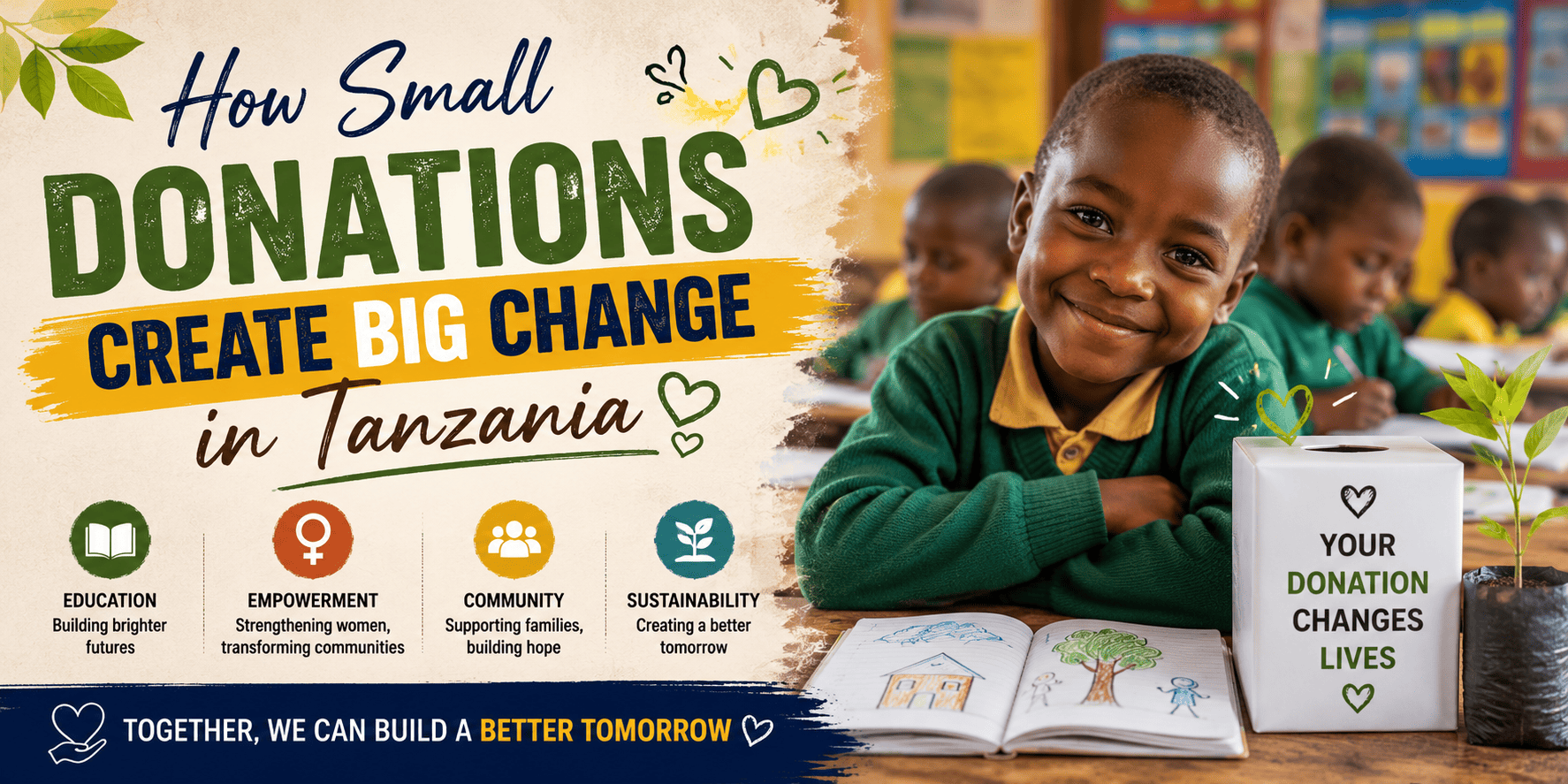
How Small Donations Create Big Change in Tanzania
The concept of making a significant difference in the world often feels daunting. Many people believe only large sums of money can solve social problems or drive meaningful change in developing countries like Tanzania. However, the reality is quite the opposite: small donations, when pooled together, have the power to transform communities, uplift families, and fuel sustainable growth. This blog explores how seemingly minor contributions can spark major change in Tanzania, offering hope and opportunity to millions.
1. The Landscape: Challenges Facing Tanzania
Tanzania, located in East Africa, is home to over 65 million people. While the country is blessed with natural beauty and rich cultural diversity, it faces numerous social and economic challenges:
- Poverty: A significant proportion of the population lives below the poverty line, especially in rural areas.
- Education Barriers: Many children lack access to quality education due to school fees, lack of materials, and long distances to schools.
- Healthcare Gaps: Rural clinics often lack basic medical supplies, and preventable diseases remain a leading cause of mortality.
- Water Scarcity: Millions still do not have access to clean, safe drinking water.
- Gender Inequality: Girls and women face social barriers that limit access to education, healthcare, and economic opportunities.
Despite these challenges, Tanzania is a country bursting with potential — a potential that small donations can unlock.
2. The Power of Small Donations: Why They Matter
It’s easy to dismiss a 5or5 or 10 donation as insignificant. However, in Tanzania, such amounts can have an outsized impact due to lower living costs and the creative, resourceful nature of local communities and organizations.
Key Ways Small Donations Matter:
- Pooling Effect: Hundreds or thousands of people giving small amounts results in a large, sustainable fund.
- Sustainability: Regular small donations ensure non-profits can plan and sustain long-term initiatives rather than one-off projects.
- Accessibility: Small donations allow more people globally to participate in philanthropy, democratizing the power to do good.
3. Where Small Donations Go: Real-Life Examples
A. Education
- School Supplies: Just $10 can buy exercise books, pens, and a backpack for a child for an entire year.
- Scholarships: Many local NGOs provide scholarships for as little as $50 per year, covering tuition and uniforms.
- Learning Materials: Small donations help buy textbooks, teaching aids, and sports equipment, transforming classrooms into engaging environments.
B. Health
- Mosquito Nets: For just $2-3, a malaria net can save a life — malaria is one of the leading causes of death among children under five.
- Basic Medical Kits: Donations of $15-20 can stock a rural clinic with essential medicines for a month.
- Maternal Health: Small funds help provide prenatal and postnatal care for mothers in remote villages.
C. Clean Water
- Water Filters: Around $20 can provide a family with a water filtration unit lasting several months.
- Well Maintenance: Regular small gifts fund the repair and upkeep of community wells, ensuring constant access to clean water.
D. Women’s Empowerment
- Microloans: Donations as small as $25 are pooled to provide microloans for women entrepreneurs, helping them start or grow businesses.
- Skills Training: Small contributions fund workshops in tailoring, agriculture, and technology, opening new paths for women and girls.
4. Case Studies: Small Donations, Big Impact
Case Study 1: From Pennies to Classrooms
An initiative called “Change for Change” encouraged schoolchildren in the US and Europe to donate spare change for building a classroom in rural Tanzania. The average gift was less than 1∗∗.Withinsixmonths,over∗∗1**. Within six months, over **12,000 was raised, enough to build a classroom, furnish it, and supply it with books for 80 students.
Case Study 2: The $5 Mosquito Net Drive
A grassroots campaign used social media to ask people to skip one coffee and donate $5 instead. The campaign funded over 2,000 mosquito nets in Western Tanzania, drastically reducing malaria cases in the targeted villages.
Case Study 3: Empowering Women Through Microfinance
A local NGO pooled small donations to offer microloans averaging $30 to rural women. In two years, over 300 women started their own businesses, leading to improved family incomes, higher school attendance, and greater gender equality.
5. The Ripple Effect: Lasting and Widespread Change
Small donations not only address immediate needs but also create ripple effects that uplift entire communities:
- Education leads to better jobs, higher incomes, and healthier families.
- Health interventions reduce absenteeism in schools and workplaces.
- Clean water improves overall community health, allowing children to attend school rather than fetching water.
- Women’s empowerment lifts families out of poverty and inspires others to pursue their dreams.
These changes are interconnected, amplifying each other over time for exponential impact.
6. Why Small Donations Work So Well in Tanzania
A. Lower Costs, Bigger Effect
The cost of goods and services in Tanzania is much lower than in Western countries. This means:
- $1 can buy a meal for a child.
- $10 can cover school supplies for a term.
- $100 can provide a scholarship for a year.
B. Strong Local Partnerships
Most effective organizations in Tanzania work directly with local leaders to identify needs and allocate resources. This ensures:
- Donations go where they’re needed most.
- Resources are used efficiently, with minimal waste.
C. Community Involvement
Projects funded by small donations often require community participation. Locals help build wells, classrooms, or clinics, fostering a sense of ownership and ensuring long-term sustainability.
7. The Role of Technology in Scaling Small Donations
Modern technology has made it easier than ever to contribute — no matter where you live. Here’s how:
- Crowdfunding Platforms: Websites like GoFundMe, GlobalGiving, and others make it simple to donate and track impact.
- Mobile Money: Services like M-Pesa allow Tanzanians to receive and use donated funds instantly, even in remote villages.
- Social Media: Campaigns spread quickly and inspire more people to join in, magnifying the effect of each small gift.
8. Overcoming Skepticism: Ensuring Transparency and Trust
One concern with charitable giving is whether donations reach those in need. In Tanzania, many NGOs are addressing this by:
- Providing regular updates and photos from funded projects.
- Sharing impact stories from beneficiaries.
- Publishing transparent financial reports.
This openness encourages sustained giving and reassures donors, no matter how small their contribution.
9. How You Can Help: Steps for Getting Involved
You don’t have to be wealthy to make a difference in Tanzania. Here’s how you can get involved:
- Select a Cause: Choose an area that resonates with you, such as education, health, or women’s empowerment.
- Research Organizations: Look for reputable NGOs or grassroots groups with a proven track record.
- Set Up Small, Regular Donations: Even 5or5 or 10 monthly can have a huge impact over time.
- Share and Inspire: Tell friends, family, and social networks about your giving and the change you see.
- Stay Connected: Follow project updates and celebrate the successes you help achieve.
10. Stories of Hope: Voices from Tanzania
Maria’s Story: A Future Teacher
Maria, age 12, nearly dropped out of school because her family couldn’t afford notebooks and uniforms. A scholarship funded by small overseas donations covered her costs for two years. Now, Maria is at the top of her class and dreams of becoming a teacher to help more children in her village.
Juma’s Journey: Clean Water for His Village
Juma, a farmer, used to walk several kilometers each day for water. After his community received funding for a well (built with small international donations), he spends more time with his family and crops. Waterborne diseases in his village have dropped dramatically.
11. The Multiplier Effect: Small Gifts, Global Movement
When you give — even a little — you inspire others. Many crowdfunding campaigns in Tanzania note that most donors give under $25, yet their collective effort funds schools, clinics, and businesses. Your small act is part of a global movement toward equity, dignity, and opportunity for all.
12. Conclusion: The Power Is in Your Hands
You don’t need to be a billionaire to make a big difference. In Tanzania, small donations:
- Educate children
- Heal the sick
- Provide clean water
- Empower women
- Build a brighter future
Each dollar, pound, or euro given is a seed planted. With care, these seeds blossom into healthier, stronger, and more vibrant communities. The power to create lasting change rests not just with a few wealthy philanthropists, but with millions of everyday people — like you.
Join the movement. Give a little, change a lot. Tanzania is waiting, and your small act of kindness can echo for generations.
Leave a Reply