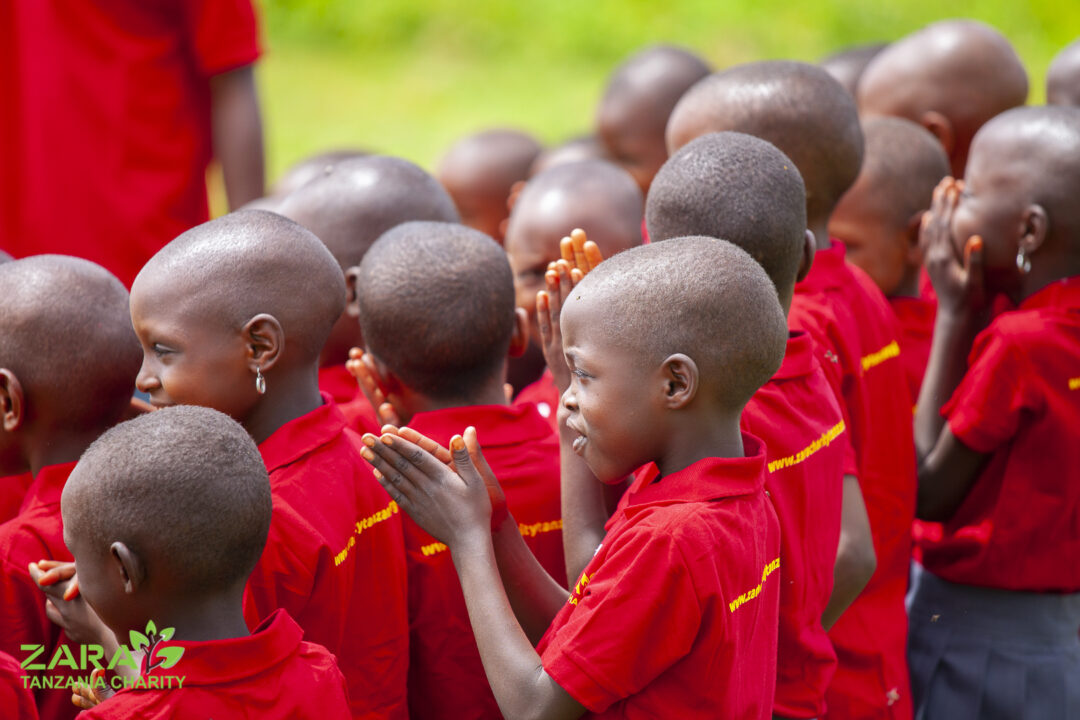
In rural Tanzania, education isn’t just about reading and writing—it’s the key that unlocks entire communities from cycles of poverty, illness, and limited opportunity. Yet 3.2 million children aged 7-17 are currently out of school, with 1.2 million having never attended. For those who do attend, literacy rates stand at approximately 76%, with significant gaps between urban and rural areas.
At Zara Charity Tanzania, we’ve witnessed firsthand how investing in education creates ripples of positive change that extend far beyond the classroom walls. From our work at Moshi Kids Centre to the Maasai Pre-School in Ngorongoro Crater, we’ve seen education transform not just individual lives, but entire communities.
Here are 10 powerful ways education is creating lasting change in rural Tanzania.

1. Breaking the Poverty Cycle
Education is the most reliable path out of generational poverty. When children in rural Tanzania gain quality education, they develop skills that open doors to better employment opportunities, higher incomes, and improved living standards.
The Reality: In communities where we work, many families survive on less than $2 per day. Without education, children often follow the same subsistence farming patterns as their parents and grandparents.
The Transformation: At Moshi Kids Centre, we’ve tracked students over five years. Those who complete primary education are three times more likely to pursue vocational training or secondary education, leading to incomes 50-80% higher than their uneducated peers.
Real Impact: Meet Amina, whose parents are subsistence farmers in Moshi. After receiving scholarship support through our programs, she excelled in primary school and is now in secondary school studying agriculture science. Her dream? To return to her village and teach modern farming techniques, helping her community break free from food insecurity while earning sustainable incomes.
“Education gave me hope that life could be different. Now I want to help my whole village see those possibilities.” – Amina, Student
2. Empowering Girls and Women
Perhaps nowhere is education’s transformative power more evident than in its impact on girls and women. Rural and poor girls face higher dropout rates from age 12 onwards due to inadequate WASH facilities, menstruation, and child marriage pressures.
The Challenge: In many rural Tanzanian communities, traditional beliefs still prioritize boys’ education over girls’. Girls face additional barriers including early marriage, domestic responsibilities, and lack of menstrual hygiene facilities at schools.
The Change: Education delays marriage and childbearing, giving girls time to develop their potential. Educated mothers are more likely to ensure their own daughters attend school, creating an upward spiral across generations.
By the Numbers:
- Girls who complete secondary education marry 4-5 years later on average
- Educated mothers are 50% more likely to vaccinate their children
- Women’s literacy rates correlate directly with reduced child mortality
- Educated women reinvest 90% of their income in their families, compared to 35% for men
Success Story: At our Ngorongoro Maasai Pre-School, we worked closely with community elders to demonstrate how education doesn’t diminish cultural identity but rather enriches it. Today, 48% of our students are girls—a remarkable achievement in a traditionally patriarchal culture. These girls are learning in Maa while also gaining Swahili and basic literacy skills.

3. Improving Community Health Literacy
Education and health are intimately connected. Schools serve as critical platforms for health education, disease prevention, and promoting healthy behaviors that benefit entire communities.
Health Through Education: When children learn about hygiene, nutrition, and disease prevention in school, they become health ambassadors in their homes. This knowledge transfer is particularly powerful in rural areas with limited access to healthcare facilities.
What We Teach:
- Handwashing and hygiene practices
- Nutrition and balanced diets
- Malaria prevention
- HIV/AIDS awareness
- Safe water practices
- First aid basics
Community Impact: In villages where we’ve implemented health education programs, we’ve observed a 60% reduction in waterborne illnesses, increased uptake of child immunizations, better nutrition practices, and reduced stigma around diseases like HIV/AIDS.
4. Creating Future Leaders
Every community needs leaders—people with vision, communication skills, and the ability to mobilize others toward common goals. Education cultivates these leadership qualities from an early age.
Leadership Development in Schools:
- Critical thinking and problem-solving
- Public speaking and communication
- Teamwork and collaboration
- Civic responsibility and ethics
- Conflict resolution
5. Boosting the Local Economy
Education creates economic multipliers in rural communities. Educated individuals contribute to economic development through entrepreneurship, skilled labor, and increased productivity.
Direct Employment: Schools themselves create jobs—teachers, administrators, cooks, maintenance staff—providing steady income in rural areas where formal employment is scarce.
Skilled Workforce: Educated youth can pursue vocational training in carpentry, tailoring, mechanics, and other trades that serve local needs while generating income.
Moshi Kids Centre Impact: Our classroom construction project employed 25 local workers, injecting approximately 45 million Tanzanian Shillings into the local economy. Beyond construction, the school employs 12 full-time staff members, all from the surrounding community.

6. Preserving Cultural Heritage While Embracing Progress
There’s a common misconception that formal education erodes traditional culture. When done thoughtfully, education actually preserves and enriches cultural heritage while equipping communities to navigate the modern world.
Culturally-Responsive Education: At Zara Charity, we believe education should build on cultural strengths, not replace them. This means teaching in mother tongues alongside Swahili and English, incorporating traditional stories and songs, respecting cultural practices, involving elders as knowledge keepers, and celebrating cultural festivals.
The Maasai Model: Our Ngorongoro Maasai Pre-School exemplifies this approach. Students learn traditional Maasai counting systems alongside modern mathematics. They hear traditional stories that teach cultural values while also building literacy skills. Elders regularly visit to share traditional knowledge about livestock management, medicinal plants, and conflict resolution.
7. Reducing Child Labor
More than 39% of individuals who did not attend school in rural Tanzania cited “satisfied with the level of education acquired” as a reason, but many children also leave school to work. Education reduces child labor by increasing the perceived and actual value of schooling.
The Child Labor Reality: In rural Tanzania, children work in agriculture, as domestic servants, in small shops, and in other informal sectors. This work compromises physical and mental development, perpetuates poverty cycles, and limits future opportunities.
Our Approach: Zara Charity provides comprehensive support—school fees, materials, uniforms, and meals—specifically targeting families at risk of pulling children out for work. We also work with parents to demonstrate the long-term economic benefits of education versus short-term gains from child labor.
8. Strengthening Family Structures
Education influences family dynamics in profound ways, generally strengthening family cohesion while challenging harmful practices.
Intergenerational Learning: Children bring new knowledge home, creating dialogue between generations. Parents learn alongside their children about health, agriculture, technology, and civic matters.
Economic Security: Educated family members contribute to household income and support extended family networks, reducing economic stress that can strain relationships.
“Before, we never discussed important decisions—my husband decided everything. Now, because my daughter asks questions she learned in school, we sit together and talk. He listens to my ideas more now.” – Mother at Moshi Kids Centre
9. Building Infrastructure and Technology Access
Schools often serve as infrastructure hubs in rural areas, bringing services and technology that benefit entire communities.
Schools as Community Infrastructure:
- Water Access: School water systems often serve neighboring households
- Electricity: Schools provide charging stations and internet access points
- Meeting Spaces: School buildings host community meetings and health campaigns
- Technology Centers: Computer labs become community resources
10. Creating Sustainable Development
True transformation isn’t about short-term fixes—it’s about building sustainable systems that continue generating benefits long after initial interventions end. Education is the ultimate sustainable development tool.
Why Education is Sustainable:
- Self-Perpetuating: Educated individuals educate others
- Multiplier Effect: One educated person influences dozens over a lifetime
- Adaptable: Education provides capabilities for changing circumstances
- Cost-Effective: Long-term returns far exceed costs
How Zara Charity Makes This Possible
These transformations don’t happen by accident. At Zara Charity Tanzania, we’ve developed a comprehensive approach to education that addresses multiple barriers simultaneously.
Our Model:
- Infrastructure Development: Building and renovating classrooms with proper WASH facilities
- Teacher Support: Training, mentoring, and fairly compensating teachers
- Student Support: Scholarships, materials, uniforms, and meals
- Community Engagement: Working with parents, elders, and local leaders
- Sustainability Focus: Building local capacity for long-term management
Where We Work:
- Moshi Kids Centre: Serving over 300 students in Kilimanjaro Region
- Ngorongoro Maasai Pre-School: Culturally-responsive early childhood education
- Multiple rural schools: Partnership programs across northern Tanzania
Our Results:
- 500+ students supported annually
- 95% attendance rate at our schools
- 85% of students transitioning successfully to next education level
- 12 classrooms built or renovated
- 25 teachers trained
- 3 communities with increased literacy rates
Your Role in Transformation
Every statistic represents a child, a family, a community. The transformation is real, but it requires sustained support.
How You Can Help:
Donate: Your financial support builds classrooms, trains teachers, and provides scholarships. Even small donations create big impacts:
- $25 provides school supplies for one student for a year
- $100 supports a student’s education for a term
- $500 trains a teacher in modern pedagogy
- $2,500 provides scholarships for 10 students for a year
- $15,000 builds a classroom serving 40+ students
Volunteer: Share your skills and time teaching or supporting programs at our schools.
Sponsor a Student: Provide ongoing support for one child’s education journey.
Partner with Us: Schools, corporations, and organizations can partner for long-term initiatives.
Spread Awareness: Share our stories and help others understand how education transforms communities.
Every Child Deserves This Opportunity
Education has transformed countless rural Tanzanian communities from places of scarcity to places of possibility. Children who once faced limited horizons now dream of becoming doctors, teachers, engineers, and community leaders. Families trapped in poverty for generations are breaking free. Communities plagued by preventable diseases are becoming healthier. Traditions are being preserved while progress accelerates.
This transformation is happening—right now—in villages across Tanzania where education is prioritized. At Zara Charity Tanzania, we see it every day in the bright eyes of students at Moshi Kids Centre, in the enthusiasm of Maasai children learning their first letters, and in the gratitude of parents whose children are getting opportunities they never had.
But millions more children are still waiting. 3.2 million children remain out of school, and countless others attend schools lacking basic resources, trained teachers, or proper facilities.
The solution is clear: invest in education. The results are proven. The time is now.
Join us in transforming rural communities, one educated child at a time.
Contact Zara Charity Tanzania
Email: zara@zaracharitytanzania.org
Phone/WhatsApp: +255 655 451 003
Website: www.zaracharitytanzania.org
Donate: gofund.me/02b1396f
Leave a Reply